

Managed IT Support Providers
Managed IT support providers oversee an organisation’s technology through an ongoing service model, combining user support, infrastructure management, cyber security and strategic planning. This approach gives growing businesses access to structured IT expertise without relying solely on internal resources.
Business Outcomes of Managed IT Support
Comparing managed IT support providers is easier when their expected business outcomes are explicit. Look beyond ticket handling to assess how the service supports operational continuity, user productivity, security governance, informed investment and technology planning.
More consistent user support
Employees have a defined route for reporting IT issues and requesting assistance. Managed support helps resolve recurring user problems systematically, rather than leaving staff to troubleshoot independently or rely on ad hoc help.
Better-maintained IT infrastructure
Regular oversight of devices, networks, servers and cloud services helps identify maintenance needs before they become larger operational issues. This creates a clearer basis for managing the technology estate as it develops.
Stronger security controls
Managed IT support can bring security checks, access management, updates and monitoring into a structured service. This helps organisations apply security measures consistently and identify areas requiring further attention.
Technology that supports growth
A managed provider can align infrastructure, user access and cloud services with changes in staffing, locations and business processes. This makes technology planning more practical for growing organisations without a full in-house IT team.
More informed technology investment
Ongoing visibility of systems, recurring issues and infrastructure condition gives decision-makers better information when assessing upgrades, replacements and new services. Investment can therefore be linked to operational requirements rather than isolated technology purchases.
Access to broader IT expertise
Managed IT support gives small and medium-sized businesses access to skills across infrastructure, cyber security, cloud solutions and connectivity. This complements internal staff and provides a wider perspective when technical or strategic decisions are being considered.
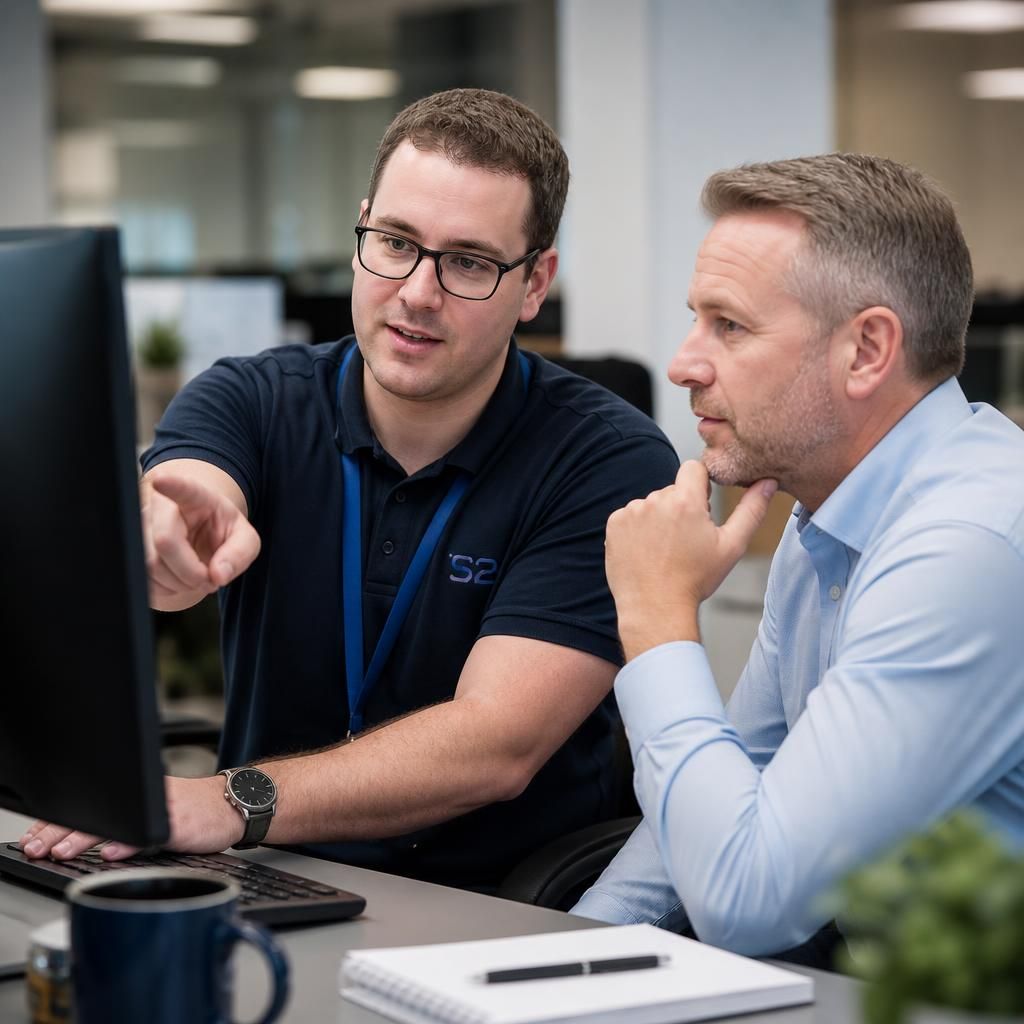
Meet the People Behind Your IT Support
A managed IT support provider does more than resolve technical faults: its people interpret business requirements, assess risk and turn technology decisions into practical actions. That human judgement is important when systems affect staff, customers and day-to-day operations.
S2 Technology Group takes time to understand how each organisation works before recommending changes. Conversations are kept clear and relevant, so decision-makers can weigh technical requirements, security considerations and likely operational effects without having to translate specialist language.
The relationship also depends on consistency. The team records the environment, explains what it is doing and works alongside internal contacts where they exist. This creates a shared understanding of responsibilities and gives the business a dependable point of reference as its technology develops.
Specialist Expertise in Managed IT Support
A leading managed IT support provider combines technical knowledge with an understanding of how business systems operate in practice. Its expertise should cover the relationships between infrastructure, identity, devices, connectivity, cloud platforms and cyber security, rather than treating each fault as an isolated issue.
S2 Technology Group applies this breadth to the requirements of growing organisations, including professional services, manufacturing, logistics and multi-site businesses. Its work spans technology assessment, infrastructure improvement, secure remote access and ongoing management, allowing recommendations to be considered against operational risk, compliance responsibilities and future growth.
This depth of practice gives decision-makers a more informed basis for choosing and prioritising technology investments. Rather than measuring a managed IT support company solely by its helpdesk function, assess whether it can connect technical decisions with resilience, security and the practical requirements of the organisation.
Questions to Ask a Managed IT Support Provider
Who owns your data when you change managed IT support providers?
Review how the provider documents changes, access permissions, incident decisions and unresolved risks. Clear records create accountability, support audits and prevent important technical knowledge remaining with one person or team.
How does a managed IT support provider measure service quality?
Assess quality through ticket trends, resolution patterns, recurring faults, security events, user feedback and performance against agreed objectives. Reviews should explain causes, improvements and outstanding risks, not merely report activity.
What should a managed IT support provider include in its service agreement?
It should define scope, responsibilities, support boundaries, security obligations, data handling, access controls, escalation routes, reporting, review arrangements, fees, renewal terms and exit provisions, including knowledge transfer and credential removal.
What happens during onboarding with a managed IT support provider?
Onboarding should map users, devices, systems, dependencies and risks, then confirm access, documentation, responsibilities and priorities. A controlled handover reduces overlooked assets and establishes a reliable baseline for ongoing management.
How does a managed IT support provider prioritise cyber security risks?
Prioritisation should combine business impact, exploitability, exposure, regulatory obligations and safeguards. Providers should rank risks transparently, address critical dependencies first, assign ownership, and review priorities as systems or threats change.
Business-Led IT
S2 Technology Group manages the links between users, devices, cloud systems and connectivity, rather than treating support issues in isolation.
Businesses We Support

Professional Services Teams
Professional services firms depend on secure access to client information, reliable collaboration tools and well-managed user devices. Managed IT support providers help coordinate these requirements while keeping security and day-to-day usability in view.

Manufacturing Operations
Manufacturing businesses often combine office systems with production technology, shared devices and site connectivity. IT support therefore needs to consider operational continuity, access controls, infrastructure maintenance and the different requirements of office and production teams.

Logistics Businesses
Logistics organisations rely on dependable connectivity and access to operational information across teams and locations. A managed IT support provider can help maintain devices, user access and cloud systems as the business coordinates schedules, stock and customer requirements.

Multi-Site Organisations
Businesses with several locations need consistent standards for devices, accounts, security and connectivity. Managed IT support brings these areas together, giving the organisation a structured way to manage shared systems while recognising the practical differences between sites.

Growing Businesses Without a Full IT Team
A growing organisation may need specialist IT knowledge before it is ready to build a complete internal team. Managed IT support providers supply an organised approach to user assistance, infrastructure management, cyber security and technology planning as requirements develop.
When to Consider a Managed IT Support Provider
Managed IT support providers can suit businesses at different stages of technology planning. Consider the model when internal IT capacity is limited, systems need structured oversight, or upcoming changes require specialist input without adding permanent technical roles.
Limited internal IT capacity
A managed IT support provider can complement a small internal team by taking responsibility for routine administration, user issues and technical maintenance, leaving in-house staff to focus on business priorities.
A growing organisation
As teams, offices and systems expand, consistent device management, access controls and documented processes become more important. External IT support can help establish a scalable foundation for further growth.
Increasing security requirements
Businesses handling sensitive information may need more structured oversight of accounts, devices, backups and cyber security controls. A managed provider can help identify weaknesses and coordinate improvements.
Multiple sites or remote users
Organisations operating across offices or with distributed teams need reliable connections, consistent policies and clear technical ownership. Managed support can bring these requirements together under one approach.
Infrastructure due for review
Ageing servers, inconsistent systems or poorly documented networks can make faults and future planning harder. A provider can assess the existing environment and help prioritise practical infrastructure changes.
Technology decisions need structure
When a business is comparing cloud services, connectivity options or system upgrades, an external IT partner can translate technical considerations into decisions that reflect operational needs and risk.
Managed IT Support Providers: Frequently Asked Questions
How do managed IT support providers work with internal IT teams?
A suitable provider combines proactive monitoring, user support, security management, cloud expertise and strategic advice, with clearly defined responsibilities, documented systems and services aligned with organisational requirements and business priorities.
When should a business move from ad hoc IT support to a managed provider?
A move makes sense when recurring faults, unmanaged risks, planned growth or technology changes exceed informal support’s capacity, causing disruption or unclear accountability. Document requirements before selecting a suitable provider.
How do managed IT support providers support remote and hybrid working?
Providers support remote and hybrid working by managing secure access, user devices, cloud applications and connectivity across locations. They also help apply consistent policies and resolve practical location-specific technical issues.
How do managed IT support providers support technology planning?
Technology planning involves reviewing current systems, identifying business requirements, prioritising risks and scheduling improvements. A managed provider can turn these findings into a practical roadmap, with dependencies and responsibilities documented.
Can a managed IT support provider manage technology suppliers?
Yes, a provider can coordinate technology suppliers by clarifying responsibilities, managing escalations, reviewing service performance and aligning third-party work with documented requirements and priorities across the organisation’s wider technology environment.
Discuss Your Managed IT Support Requirements
Discuss your requirements with S2 Technology Group to understand whether a managed IT support model fits your organisation. An initial conversation can help identify priorities, clarify responsibilities and outline practical next steps for improving technology oversight.