
Which IT functions can managed IT services cover?
Managed IT services can cover day-to-day IT support, infrastructure and network management, cloud solutions, cyber security, remote monitoring, business connectivity, IT asset management and service management. They may also include technology consulting and project management, with the exact responsibilities defined according to the organisation’s systems, risks and business requirements.
Managed IT services can cover the operational, technical and governance functions needed to run a business technology environment. The provider’s role may range from handling user issues and maintaining devices to managing infrastructure, controlling access, reducing cyber risk and advising on technology decisions. The precise scope should be documented in the service agreement, including which systems are included, what the provider is responsible for and which duties remain with the organisation.
User support and service desk operations form one of the most visible parts of a managed service. This can include receiving and categorising requests, diagnosing faults, guiding users through routine tasks and recording the work in a service management system. Common examples include problems with email, access permissions, devices, software, printing, collaboration tools and remote access. A well-defined process distinguishes incidents, which interrupt an existing service, from service requests, such as asking for a new user account or application.
Endpoint and workplace technology management covers the computers, mobile devices and other equipment employees use to access business systems. Typical activities include configuring devices, applying approved updates, managing security settings, installing standard applications, encrypting equipment where appropriate and removing access when a device is retired. Standardising these controls helps reduce variations between devices and makes it easier to investigate faults or security events.
Identity and access management controls who can use a system and what they are allowed to do. Managed functions may include creating, changing and removing user accounts; assigning access according to job responsibilities; enforcing multi-factor authentication; reviewing privileged accounts; and supporting joiner, mover and leaver processes. This is particularly important when staff change roles, contractors require temporary access or a business operates across multiple locations.
Infrastructure management applies to the underlying systems that support applications and data. Depending on the environment, this may include servers, virtual machines, storage, directories, databases and related facilities. The work can involve configuration, patching, capacity planning, fault investigation, performance review and lifecycle decisions. Infrastructure management is not limited to fixing failures; it also involves identifying ageing or unsupported components before they become operational or security risks.
Network and connectivity management covers the systems that allow sites, users and services to communicate. This may include switches, wireless networks, firewalls, routers, site-to-site links, remote access and internet connectivity. The function commonly involves maintaining configurations, separating sensitive systems where appropriate, investigating connection problems and reviewing whether network capacity and design remain suitable as the organisation changes.
Cloud service administration can include setting up and maintaining cloud platforms, managing subscriptions, configuring permissions, supporting migrations and reviewing how cloud resources are being used. It may also involve connecting cloud services with existing systems and checking that data protection, authentication and backup arrangements are appropriate. Cloud management should address both technical configuration and ownership, so that the organisation understands which information is held where and who can administer it.
Cyber security management is broader than installing security software. Managed security functions may include maintaining protective controls, reviewing vulnerabilities, monitoring relevant alerts, supporting phishing and malware investigations, managing access safeguards and advising on security improvements. A provider may also help establish policies, test incident procedures and define how a suspected compromise should be contained, investigated and escalated. Security responsibilities need to be clear because technology controls alone do not determine how people should respond to a threat.
Data protection, backup and recovery support can help an organisation prepare for accidental deletion, equipment failure, service disruption or a security incident. Relevant activities may include checking backup configurations, monitoring backup jobs, controlling access to backup data and documenting recovery procedures. Backup is only one part of recoverability: businesses also need to identify important services, set priorities for restoring them and understand the dependencies between applications, systems, suppliers and data.
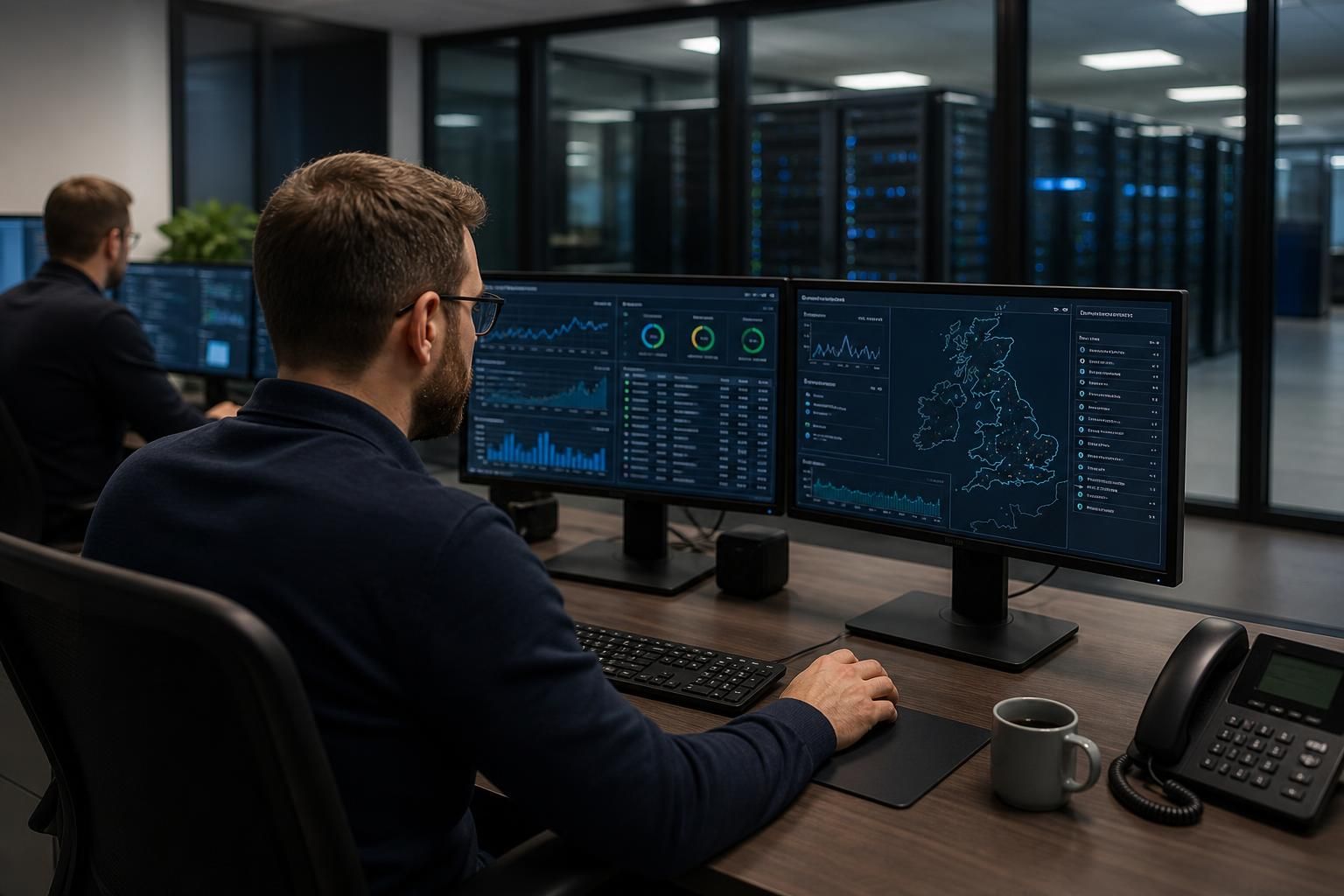
Monitoring and maintenance provide information about the condition of the technology estate. Monitoring may cover system availability, resource use, storage, network performance, security events and the status of important services. Maintenance can include updates, configuration changes, certificate renewals, housekeeping and planned remediation. Monitoring data is most useful when it leads to an action, such as investigating a recurring fault, addressing a capacity issue or escalating an unusual security event.
IT asset and supplier administration helps maintain an accurate record of equipment, software, licences, contracts, warranties and ownership. This information supports budgeting, renewal planning, security reviews and the removal of obsolete assets. A managed provider may also coordinate with telecommunications companies, software suppliers, hardware vendors and other third parties, while keeping responsibility for the final business decision with the client.
Technology projects and change management can be included where a business is introducing, replacing or significantly altering a system. This may involve requirements gathering, solution design, planning, testing, migration, user preparation, documentation and post-implementation review. Treating project work separately from routine support is important because a change can affect service continuity, security controls, data quality and the support model after implementation.
Reporting, documentation and governance turn day-to-day technical activity into information that decision-makers can use. Useful reporting may cover recurring incidents, unresolved risks, asset changes, security issues, capacity concerns and planned improvements. Documentation can include network diagrams, system records, access procedures, recovery instructions and supplier details. These records should be kept current; outdated documentation can create risk even where the underlying systems are functioning correctly.
Not every organisation needs every function, and responsibilities can be divided in several ways. A business might outsource routine administration while retaining strategic decisions, keep application support with an internal team, or ask a managed provider to coordinate several specialist suppliers. The agreement should define included systems, exclusions, approval requirements, escalation routes, maintenance responsibilities, data access, reporting arrangements and how changes to the scope are handled.
When comparing coverage, businesses should look beyond a list of services. Important questions include:
- Which users, sites, devices, applications and infrastructure are included?
- Does the service cover prevention and improvement as well as fault resolution?
- How are security events, major incidents and third-party failures handled?
- What information will be recorded, reported and reviewed?
- Which tasks require the client’s approval or participation?
- How will new systems, acquisitions, office moves or changes in business structure affect the scope?
For small and medium-sized organisations, this structured division of responsibility can provide access to a broader range of technical disciplines without requiring every function to be maintained internally. S2 Technology Group provides managed IT support, cyber security, cloud and connectivity services for businesses around Stourbridge, Kinver, Wordsley, Kingswinford, Kidderminster, Halesowen, Dudley and neighbouring areas, with the appropriate combination determined by the organisation’s systems and requirements.
Managed IT service coverage is most useful when it is mapped to business activities rather than presented as a list of technical tasks. For example, preparing access for a new employee may involve an approved request, identity setup, device configuration, application permissions, security checks and an asset record. Defining the complete chain shows whether the provider covers the outcome or only selected steps.
For each function, the agreement should clarify what triggers the work, who owns it, where responsibility passes between teams and what record confirms completion. During an office move, for instance, a provider might prepare connectivity and devices while the organisation approves expenditure, confirms user requirements and validates access to business applications. Making these hand-offs explicit reduces gaps between internal staff, the provider and third-party suppliers.
This process-based view also makes service coverage easier to review when the organisation introduces a new system, changes its structure or expands to another site. Instead of asking only whether a particular technology is listed, the business can check whether the related support, security, administration and decision-making responsibilities have also been assigned.