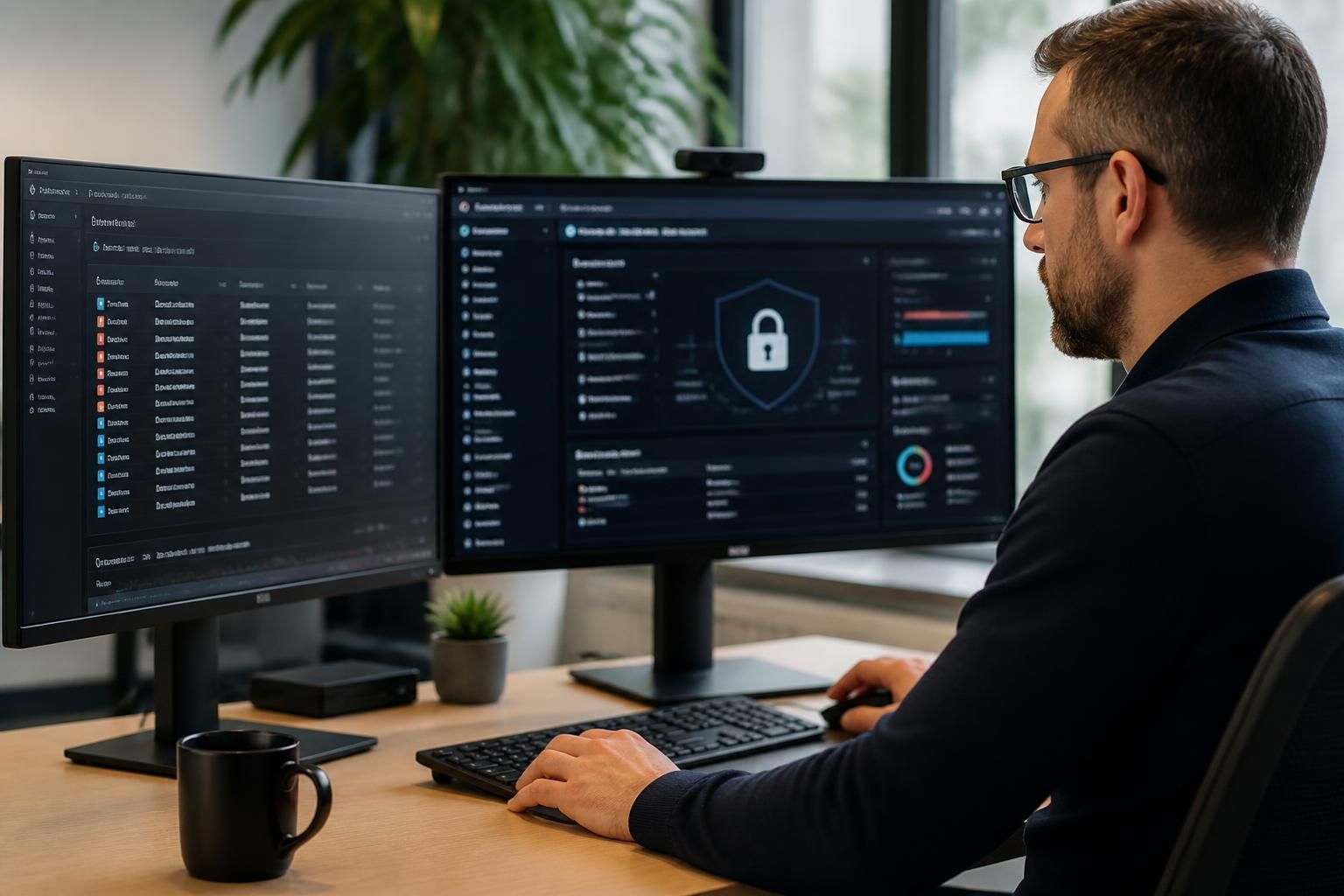
How is security managed in hosted desktop services?
Security in hosted desktop services is managed through layered controls, including encrypted connections, identity verification, permission management, secure configuration, software patching and activity monitoring. Providers also use backup and recovery processes to help protect hosted systems and data, while access policies and regular reviews reduce the risk of unauthorised use.
Security in a hosted desktop service is managed through a combination of platform governance, controlled administration, tenant isolation, secure operations and tested incident procedures. The provider is responsible for protecting the hosted environment, while the customer remains responsible for how users, devices and business data are used within it.
Responsibility is shared. A provider should define which security measures it operates and which remain with the customer. The provider’s duties may include protecting the data-centre environment, maintaining the virtualisation platform, managing infrastructure vulnerabilities and safeguarding administrative systems. The customer still needs to approve users, control business access, protect local devices and establish acceptable-use rules. Clear ownership prevents gaps where each party assumes the other is handling a particular risk.
Physical and infrastructure protection. Hosted desktops run in professionally managed data-centre environments rather than on an office computer. Security management can therefore include controlled physical entry, environmental safeguards, resilient power and network design, and restricted access to servers and storage. These measures protect the underlying infrastructure from risks such as theft, equipment failure and unauthorised physical intervention.
Tenant separation. A hosted desktop platform may serve multiple organisations, so the provider must separate customers’ virtual machines, storage and management data. Isolation controls should prevent one customer’s users or administrators from viewing another customer’s sessions or information. The design should also consider shared components, temporary files, clipboard access, printing and file-transfer channels, as these can create unintended routes between the hosted environment and local devices.
Administrative security. Provider and customer administrator accounts should be tightly controlled because they can affect many users or desktops at once. Good practice includes named accounts, separate administrative identities, approval for sensitive changes, restricted management access and a documented process for removing privileges when someone changes role or leaves. Administrative actions should be attributable to an individual rather than to a shared login.
Session and device controls. Security policies can limit where and how a hosted desktop is used. Examples include restricting access from unmanaged devices, preventing data from being copied to local storage, controlling removable media and applying different rules to office, home and public-network connections. Session time-outs, automatic locking and restrictions on redirection features can reduce exposure when a device is lost or left unattended.
Information handling. Not every user needs access to every type of business information. Organisations should classify sensitive data, decide which applications and records may be used through the hosted desktop, and specify whether information can be printed, downloaded or transferred to another system. Retention and deletion rules should also cover user profiles, temporary files, exported reports and records created during support work.
Security monitoring and evidence. Effective management requires usable records of authentication events, administrative changes, configuration changes and unusual activity. Logs should be protected from unauthorised alteration, retained for an appropriate period and reviewed according to the organisation’s risk. Monitoring is more useful when it produces an investigation trail, rather than simply collecting large volumes of technical events that nobody assesses.
Incident management. The service agreement should explain how suspected compromise, malware, unauthorised access or data loss is reported and investigated. It should identify notification responsibilities, escalation routes, evidence handling and the steps used to contain an affected account, application or virtual desktop. After an incident, the provider and customer should review the cause, affected systems and corrective actions rather than treating account restoration as the end of the process.
Security assurance. When assessing a hosted desktop service, ask for details of its security policies, independent assurance, data-location arrangements, subcontractors, vulnerability management process and incident-notification terms. It is also important to establish how often access rights, configurations and recovery procedures are reviewed. Documentation should match the service actually being delivered; a general security statement is not a substitute for understanding the controls applied to a particular hosted desktop environment.
For a small or medium-sized organisation, the practical objective is a written security model that covers the provider, users, devices, applications and data together. S2 Technology Group can help businesses around Stourbridge, Kinver, Wordsley, Kingswinford, Kidderminster, Halesowen and Dudley assess hosted desktop arrangements as part of a wider managed IT and cyber security strategy.
Encryption protects hosted desktop data while it travels between a user’s device and the hosted environment, and while it is stored on the platform. Effective security management considers both states rather than treating an encrypted login connection as complete protection. The encryption approach should also cover virtual desktop storage, backup copies and administrative connections, with controls around who can access or manage the relevant keys.
When reviewing a hosted desktop service, ask which data is encrypted, how encryption keys are protected and whether key access is recorded. Encryption reduces the value of intercepted or stolen data, but it does not prevent misuse by an authenticated account. It therefore needs to operate alongside identity controls, permissions and monitoring as part of the service’s wider security model.