

Can virtual IT services support business application integration?
Yes. Virtual IT services can support business application integration by assessing compatibility, configuring connections between cloud and on-premises systems, and managing the access, data flows and security controls those connections require. This can help applications share information more consistently while reducing duplicated administration and integration-related risks.
Virtual IT services can support business application integration by providing the technical oversight needed to connect systems, govern the exchange of information and maintain those connections as the business changes. The work is not limited to linking two applications: it includes understanding business processes, defining ownership of data, controlling permissions, testing workflows and monitoring integration performance.
Integration starts with process and system analysis. Before a connection is configured, the existing application landscape should be mapped. This identifies which systems hold the authoritative version of each type of information, how data is currently entered and where staff duplicate work. For example, a customer relationship system, finance application and operational platform may all contain customer details, but each may use different fields, naming conventions or record identifiers. Resolving these differences is necessary before information can move reliably between them.
A virtual IT service can document the required data flows and establish whether an integration should be one-way, two-way or triggered by a particular event. It can also help determine whether the most suitable approach is an application programming interface (API), a supported connector, scheduled file exchange, database link or an integration platform. The choice depends on the applications involved, the sensitivity of the data, the required frequency of updates and the level of control available from each supplier.
Data mapping is a central part of the process. Each field transferred between applications needs a defined meaning, format and destination. This may include customer names, addresses, order references, stock information, invoices, staff records or service status. Rules may be needed to standardise dates, currencies, telephone numbers and duplicate records. Where one application requires information that another does not hold, the design should identify how missing values are handled rather than allowing incomplete records to pass unnoticed.
- Define the source and destination for each data item.
- Specify which application can create, amend or delete a record.
- Set rules for matching records and resolving duplicates.
- Record how rejected, incomplete or incorrectly formatted data is handled.
- Identify who owns decisions about changes to the mapping.
Security must be designed into the connection. Integrations often create a route between systems that were previously separate. Access should therefore be limited to the applications, accounts and data required for the intended process. A virtual IT provider can help apply least-privilege permissions, separate administrative access from routine integration activity and review whether credentials, tokens or certificates remain appropriate. Sensitive information should be protected while it is transferred and stored, with logs retained where they are needed for investigation and governance.
Identity and access controls also matter when staff, contractors or departments use an integrated workflow. A user should not gain access to information in a connected system merely because they can use the originating application. Permissions need to be considered across the complete data path, including service accounts used by the integration itself. This is particularly important where applications contain financial, personnel, customer or commercially sensitive information.
Testing should cover both normal and abnormal conditions. A connection may appear to work while still producing incorrect results in less common situations. Testing can include new records, amended records, cancelled transactions, duplicate entries, missing fields, invalid values and temporary loss of access to one application. It should also confirm that a failed transfer can be identified and safely retried without creating duplicate orders, invoices or records.
A controlled implementation usually separates development or test work from live systems. Sample data can be used to verify field mappings and business rules before the integration is introduced into production. Test results, approvals and known limitations should be recorded so that future administrators understand what was checked and why the configuration was accepted.
Ongoing management is as important as initial configuration. Application updates can change APIs, permissions, field names or authentication methods, potentially breaking an otherwise stable connection. Virtual IT services can maintain an inventory of integrations, record dependencies and include connected systems in change assessment. This makes it easier to understand which workflows could be affected by a proposed upgrade, configuration change or supplier decision.
Monitoring should provide useful operational information rather than simply confirming that a connection exists. Appropriate checks may identify failed transactions, unusual delays, increased error volumes, authentication failures or unexpected changes in data. Alerts should be directed to an identified owner, with a documented process for investigating the issue, correcting the cause and recovering any transactions that were not processed.
Business continuity should also be considered. If an integrated application becomes unavailable, the business needs to know whether transactions can be queued, processed manually or recovered from an intermediary system. Recovery procedures should explain how to reconcile records after service is restored and how to prevent the same transaction from being processed twice. These decisions depend on the importance of the workflow and the consequences of delayed or lost data.
Virtual IT services are most effective when integration is treated as a managed business capability rather than a one-off technical task. The service should include clear documentation, ownership, access reviews, testing records, change controls and arrangements for dealing with failures. For a small or medium-sized organisation without a full in-house IT team, this provides a structured way to coordinate application suppliers, internal users and technical administrators without leaving the integration dependent on undocumented knowledge.
Before proceeding, a business should clarify which processes need integration, what information must move, how quickly it needs to be available, which system is authoritative and what would happen if the connection failed. It should also check that suppliers support the proposed integration method and that contractual, regulatory and data protection requirements are understood. These questions help determine whether integration is technically suitable and whether the resulting workflow will be maintainable in practice.
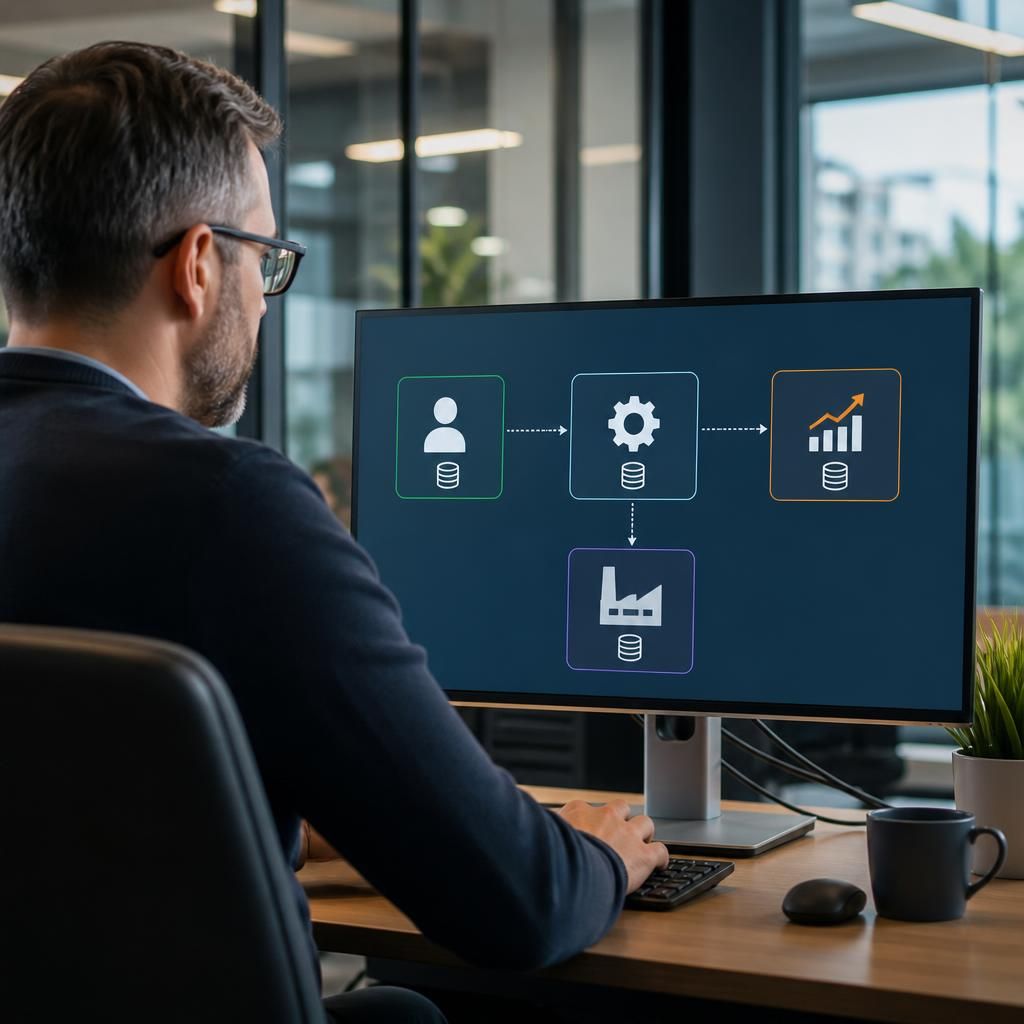
Business application integration should support the people using the connected systems, not simply move data between them. Staff need to understand which application they should use for each task, where information is updated, and when a process still requires human approval. Clear workflow guidance helps prevent users from entering the same information in several places or making changes in a system that is not the recognised source.
It is also useful to document how integrated workflows affect different roles. Finance staff, operational teams and managers may each see different parts of a process, with separate responsibilities for reviewing, approving or correcting information. Virtual IT services can help translate the technical design into practical procedures, including user guidance, escalation routes and instructions for handling exceptions. This makes the integration easier to operate and reduces reliance on informal knowledge when responsibilities change.