Which Microsoft 365 security roles benefit from administration training?
Microsoft 365 security administration training benefits global and security administrators, identity and access administrators, compliance officers, and technical support staff who manage security controls or investigate risks. It is also valuable for IT managers and business owners who oversee Microsoft 365 governance, ensuring responsibilities such as access management, policy configuration, monitoring and incident escalation are understood clearly.
Microsoft 365 security administration training benefits anyone who can change security settings, approve access, investigate activity or influence how sensitive information is handled. The depth of training should reflect each person’s permissions: a tenant administrator needs detailed configuration and recovery knowledge, while a service desk colleague may need focused guidance on identity verification, secure access requests and escalation.
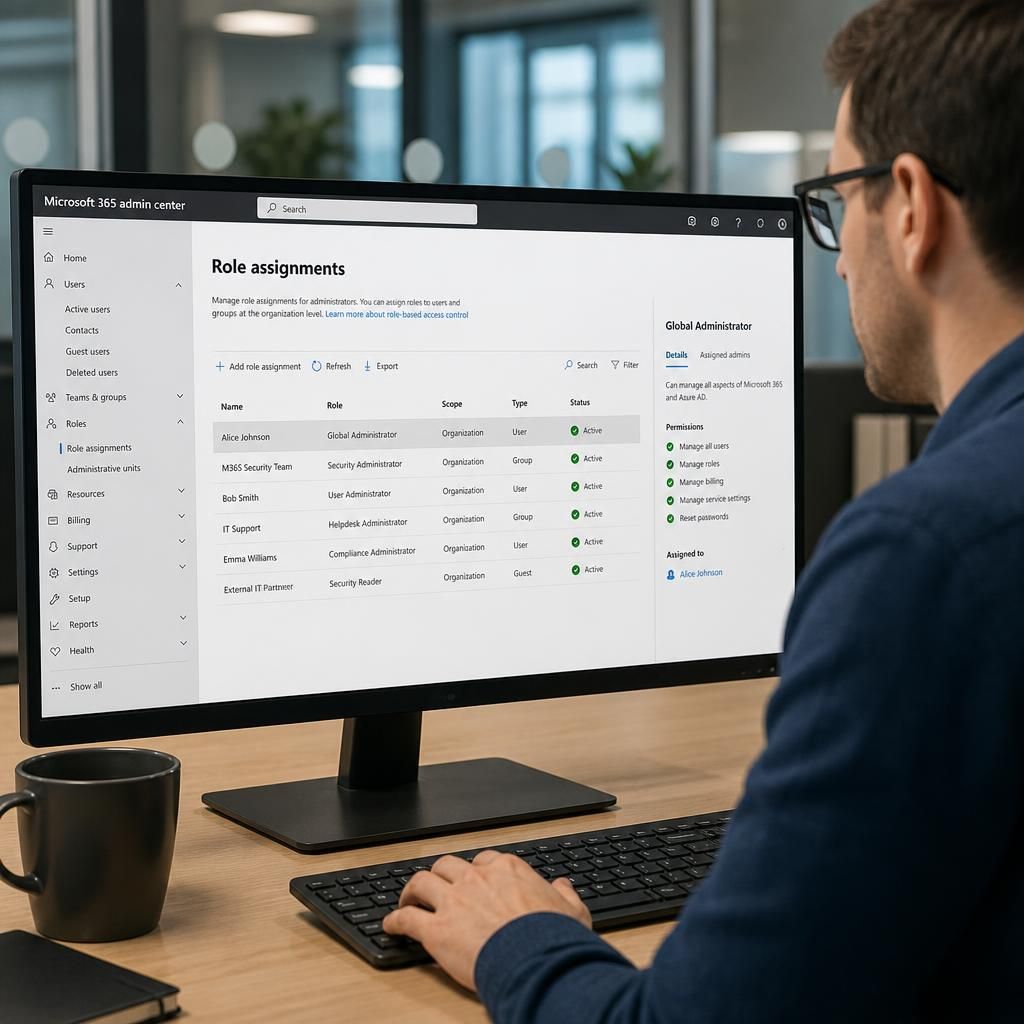
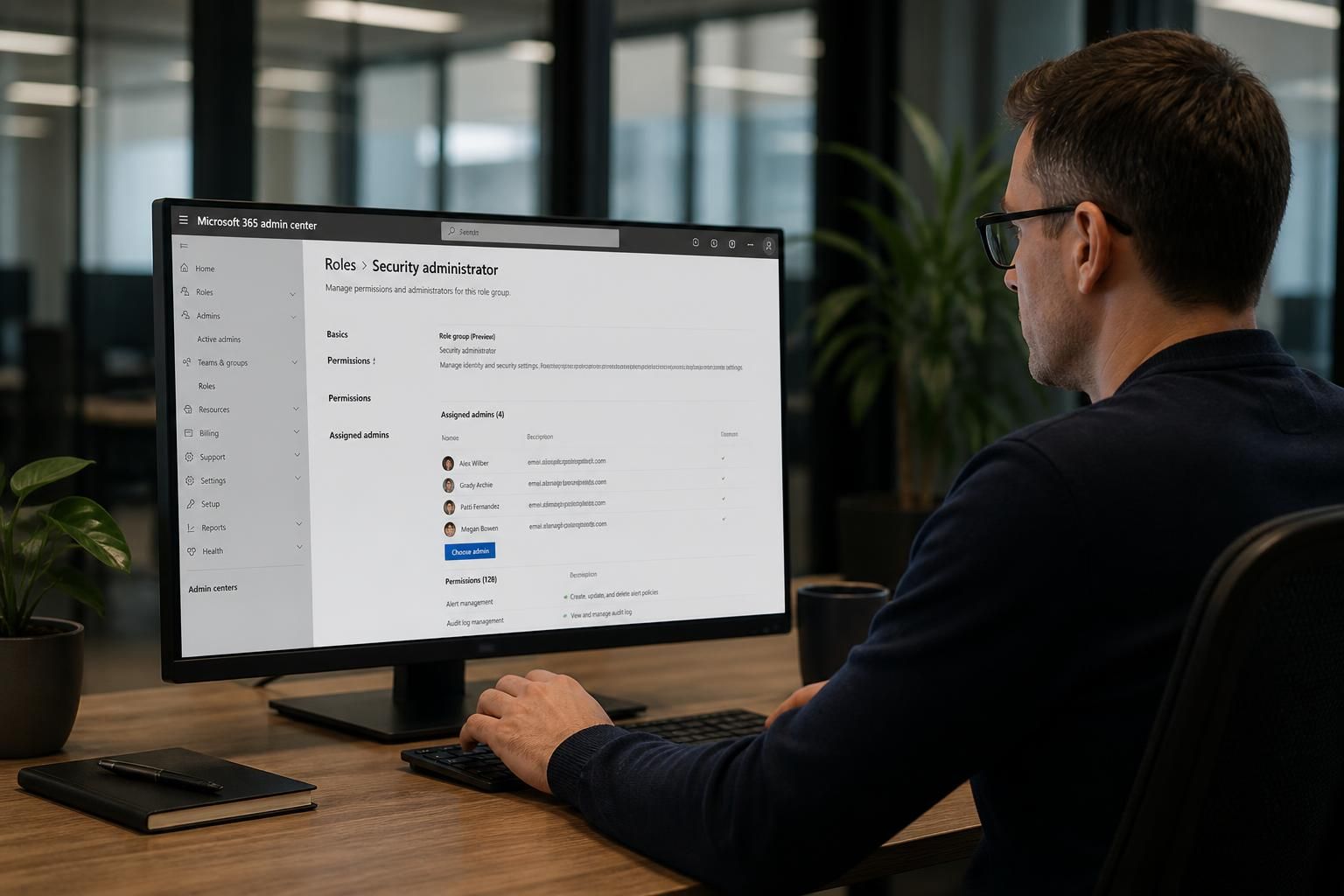
People responsible for privileged access benefit from learning how administrative roles should be assigned, reviewed and separated. Training should cover least-privilege access, delegated administration, temporary elevation, emergency access accounts and the risks of using highly privileged accounts for routine work. This helps administrators distinguish between a setting that is convenient and one that creates unnecessary exposure.
- Identity and access teams need practical knowledge of user and group lifecycle controls, authentication methods, access reviews and policy interactions. Their training should explain how a change affecting sign-in or access can have consequences across users, applications and devices.
- Security operations personnel benefit from learning how to interpret alerts, connect related events, preserve relevant evidence and decide when an investigation needs escalation. Administration training is particularly useful where analysts must move from observing a risk to applying or recommending a corrective control.
- Service desk and technical support staff need clear boundaries around password resets, account recovery, authentication changes and requests for elevated access. Training should show how to verify the requester, record the action and refer unusual or high-risk requests rather than bypassing a control to resolve a ticket quickly.
- Application owners and developers benefit where their systems connect to Microsoft 365. They should understand delegated and application permissions, consent decisions, app registrations and the importance of reviewing unused access. This reduces the chance that a legitimate business application becomes an uncontrolled route to organisational data.
- Compliance, risk and information governance professionals need enough administrative understanding to interpret security evidence, challenge access decisions and check that policies are operating as intended. They may not configure every control themselves, but they should be able to identify gaps in ownership, review and documentation.
- IT managers and technology decision-makers benefit from governance-focused training. This includes understanding who can approve changes, how responsibilities are divided, what evidence should be retained and how security exceptions are assessed. It supports informed oversight without requiring every manager to perform technical administration.
Training is also valuable for people who do not hold a permanent administrative role but take part in change approval, incident handling or access governance. Temporary responsibility can still create risk if the individual is unfamiliar with the tenant’s control structure. A short, role-specific module may be more appropriate than full administrator training, provided it covers the decisions that person is authorised to make.
The most effective course design separates technical operation from governance. Administrators should practise making controlled changes, checking their effect and reversing them safely. Reviewers should learn how to question those changes and confirm that approvals, ownership and evidence are present. This separation helps reduce the risk of one person granting access, approving the request and validating the outcome without independent scrutiny.
Administration training should include realistic exercises rather than relying only on terminology or demonstrations. Useful scenarios include investigating an unexpected sign-in, reviewing an access request, assessing an application permission, handling a departing user and responding to a suspected compromise. Exercises should require participants to explain their reasoning, identify the relevant owner and record the action taken.
Training should be refreshed when responsibilities change, new controls are introduced or recurring mistakes reveal a knowledge gap. Competence can be assessed through practical tasks, decision-based questions and review of administrative records, rather than attendance alone. For a small or growing organisation, mapping each security responsibility to a named role provides a practical way to identify who needs detailed administration training, who needs awareness training and where a second reviewer is required.
S2 Technology Group can help organisations assess these responsibilities as part of wider Microsoft 365 security planning, linking training requirements to access management, governance and day-to-day IT administration.
Delegated and external administrators also benefit from Microsoft 365 security administration training. Where an organisation uses an external IT provider or grants partner access, responsibility is shared but accountability remains with the tenant owner. Training should clarify which tasks may be performed, which approvals are required and how access is removed when the relationship or assignment changes.
- Tenant owners should understand the scope and purpose of delegated administration.
- External administrators should know the organisation’s approval, documentation and escalation requirements.
- Governance contacts should be able to review administrator activity and confirm that access remains justified.
This focus helps prevent unclear ownership, excessive partner permissions and access that remains active after a project or support arrangement ends. It also gives the organisation a consistent basis for reviewing third-party administration without requiring every stakeholder to perform technical configuration.