

What types of businesses need managed network services?
Managed network services suit small and medium-sized businesses, growing organisations and multi-site companies that depend on reliable, secure connectivity but do not have a full in-house IT team. They are particularly relevant to professional services, manufacturing and logistics businesses where network performance, access control and capacity need ongoing oversight.
Businesses that need managed network services are those whose daily operations depend on dependable connectivity, secure access and a network that is properly maintained, but which do not want to manage every technical responsibility internally. This includes small and medium-sized organisations, growing firms, distributed workplaces and businesses with specialist operational or compliance requirements.
Business size is not the only factor. A relatively small organisation may have a complex network if it uses cloud applications, hosted systems, remote access, internet-based telephony, wireless devices and several types of connected equipment. Conversely, a larger business with a well-resourced internal IT team may use a managed service to provide additional expertise or support a co-managed approach. The relevant question is how important the network is to the organisation and whether it has the people, processes and knowledge to manage it consistently.
- Businesses without a dedicated network specialist: A generalist IT employee may be able to handle routine user support without having the time or specialist knowledge to manage network configuration, security controls, performance and documentation. Managed network services provide structured technical oversight without requiring the business to recruit a full network team.
- Growing organisations: Expansion can introduce additional users, devices, applications, offices and access requirements. A network that worked for a smaller operation may become difficult to manage as these demands increase. Managed oversight helps the organisation assess changes before they create avoidable capacity, compatibility or security problems.
- Multi-site businesses: Organisations operating from more than one premises often need consistent connectivity, access controls and network standards across locations. This applies to businesses with offices, branches, warehouses, workshops or other operational sites. Centralised management can make it easier to identify differences between sites and maintain an accurate view of the overall environment.
- Professional services firms: Solicitors, accountants, consultancies and similar firms commonly depend on cloud platforms, shared files, email, video conferencing and secure access to sensitive client information. Network management is relevant where interruptions, poorly controlled access or unreliable wireless connectivity could affect fee-earning work and information handling.
- Manufacturing and logistics businesses: Production, stock control, warehouse systems, handheld devices, scanners and operational communications may all rely on network connectivity. These businesses can require careful separation between different types of device, suitable wireless coverage and planned changes that take account of operational dependencies.
- Businesses handling sensitive or regulated information: Organisations that store personal, financial, confidential or commercially sensitive data need more than a working internet connection. They need appropriate access management, secure configuration and records of how the network is structured and maintained. Managed network services can support these controls, although responsibility for policies, data governance and business decisions remains with the organisation.
Managed network services are also relevant to businesses with a largely cloud-based technology estate. Moving applications and storage to cloud platforms does not remove the need for a well-managed local network. Users still require secure internet access, reliable wireless connections, suitable bandwidth and controlled routes to cloud services. Problems in the local network can affect several applications at once, even when those applications are hosted elsewhere.
Remote and hybrid working can increase the need for consistent network management. Employees may connect from different locations, use collaboration tools and require access to business systems without exposing those systems unnecessarily. The business must still decide who should have access and what information they may use; a managed service can help implement and maintain the technical arrangements that support those decisions.
Some organisations choose managed network services because they are undergoing change. Office moves, infrastructure upgrades, new internet connections, wireless improvements, cloud migrations and the introduction of new devices can all create dependencies between network components. External management is particularly useful when the business needs changes planned, documented and tested rather than made informally.
Signs that a business may be ready to consider managed network services include:
- network problems are investigated reactively rather than through a defined management process;
- no current network diagram, asset record or configuration documentation exists;
- different sites or departments use inconsistent equipment or access arrangements;
- the business cannot easily identify which systems, users or devices depend on a particular connection;
- growth, relocation or new applications are placing greater demands on connectivity;
- internal staff are spending significant time on network administration instead of their main responsibilities; or
- the organisation needs clearer ownership of network monitoring, maintenance, security coordination and technical changes.
A managed network service is not automatically necessary for every business. An organisation with a simple network, limited reliance on connected systems and sufficient internal expertise may prefer to manage it directly. The case becomes stronger when network failure would disrupt core work, when the environment is changing, or when the business needs repeatable processes and specialist oversight.
For businesses around Stourbridge, Kinver, Wordsley, Kingswinford, Kidderminster, Halesowen, Dudley and neighbouring areas, S2 Technology Group can assess whether managed network services fit the organisation’s size, working practices, sites, applications and internal capability. The assessment should focus on the network’s role in the business rather than treating company size or sector as the deciding factor.
Businesses that rely on one employee’s informal knowledge of the network may also benefit from managed network services. If that person changes role or leaves the organisation, important details about configurations, suppliers, access arrangements and dependencies can be difficult to recover. External management provides a structured way to maintain this technical knowledge rather than leaving it with one individual.
This is particularly relevant where the network supports several business-critical systems but internal responsibilities are shared between staff with other duties. Maintaining configuration records, change history and defined management processes can give the organisation a clearer technical baseline and make future decisions easier to assess.
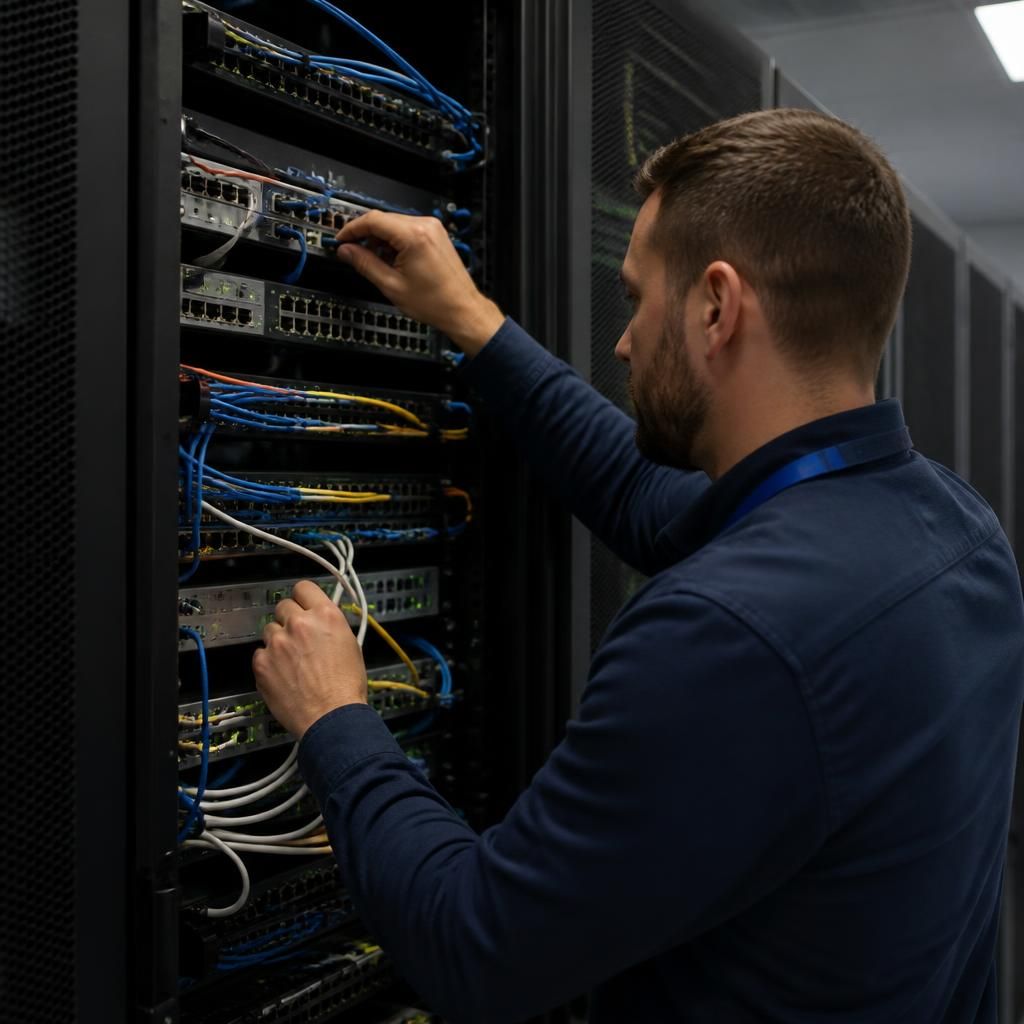
Discuss Whether Managed Network Services Fit Your Business
If you are unsure whether your network’s complexity, business reliance or internal capability justifies external management, discuss your requirements with S2 Technology Group. An initial conversation can help clarify the responsibilities, risks and support model that would be appropriate for your organisation.