

What does managed IT infrastructure include?
Managed IT infrastructure includes the ongoing oversight of an organisation’s hardware, software, networks, cloud services, connectivity, data protection and cyber security controls. It combines proactive monitoring, maintenance, technical support and strategic improvements to keep systems reliable, secure and suitable for business needs.
Managed IT infrastructure is an ongoing service model for operating, maintaining and improving the technology environment a business depends on. It covers the technical foundations behind users, applications and data, together with the processes used to monitor performance, control risk, resolve faults and plan future changes.
Asset and configuration management provide the starting point. A managed service should maintain an accurate record of relevant devices, servers, network equipment, software, cloud resources, licences and ownership details. Configuration information is also important: documenting how systems are connected and which settings they rely on makes troubleshooting more reliable and helps identify unauthorised or unsupported changes.
Workplace and server management commonly includes the administration of desktops, laptops, mobile devices, virtual machines and physical servers. Activities may include operating system maintenance, software deployment, storage management, performance checks, fault diagnosis and secure retirement of equipment. The precise scope should state which device types, operating systems and business applications are included, rather than treating every item in the environment as automatically covered.
Network and connectivity management deals with the systems that allow people, sites and services to communicate. This can include wired and wireless networks, firewalls, routers, switches, internet connections, site-to-site links and remote access arrangements. Management involves reviewing capacity, investigating instability, controlling configuration changes and checking that network access is appropriate for the organisation’s structure.
Identity and access administration controls who can use systems and what they are permitted to do. A managed infrastructure service may support account creation and removal, role-based permissions, authentication policies, privileged access and periodic access reviews. Linking access to a person’s role and employment status reduces the risk created by excessive permissions or accounts that remain active after they are no longer needed.
Cloud infrastructure management extends these responsibilities to hosted platforms and cloud-based resources. It can include account structures, virtual servers, storage, cloud networking, user access, configuration standards and service dependencies. A useful service also considers how cloud resources connect with office-based systems, because a fault or security weakness in one environment can affect the other.
Maintenance and monitoring are central to the managed approach. Monitoring can examine availability, resource usage, storage capacity, service status, backup activity and selected security events. Maintenance may involve applying updates, removing obsolete software, renewing certificates or licences, and correcting configuration issues. Monitoring is not a substitute for judgement: alerts need defined ownership, appropriate thresholds and a process for deciding whether an event requires investigation.
Cyber security controls form part of the infrastructure rather than sitting separately from it. Depending on the agreed scope, this may include endpoint protection, firewall administration, secure configuration, email security, multi-factor authentication, vulnerability management, access reviews and security event investigation. The service should distinguish between preventative controls, detection capabilities and the actions taken when suspicious activity is identified.
Data protection, backup and recovery address the consequences of hardware failure, accidental deletion, system corruption or a security incident. This includes identifying which data and services require protection, managing backup jobs, checking that backups complete, restricting access to backup data and testing whether information can be restored. Recovery arrangements should be documented in business terms, including which systems are most important and the dependencies that must be available before they can be brought back into use.
Technical support and incident management provide a structured route for reporting faults, investigating their causes and recording the actions taken. Good records separate incidents from recurring problems: restoring a service addresses the immediate issue, while problem management looks for the underlying cause. Requests such as new user access, equipment changes or software installations should be assessed against security and configuration standards rather than completed without control.
Change and lifecycle management help prevent infrastructure work from creating avoidable disruption. Changes should be described, assessed for risk, approved by the appropriate people and recorded after implementation. Infrastructure also needs a lifecycle plan covering replacement, warranty or support status, software compatibility, capacity and disposal. This is particularly relevant where older systems remain connected to newer cloud, network or security services.
Documentation and reporting turn day-to-day technical activity into information that the business can use. Useful documentation may include network diagrams, asset records, system dependencies, access procedures, backup arrangements, supplier details and recovery instructions. Reporting should explain significant incidents, outstanding risks, completed maintenance, planned changes and decisions requiring business input, without presenting technical activity as an end in itself.
The contents of a managed infrastructure service should therefore be defined in a written scope. It should identify the supported locations, users, devices, applications, cloud services and connectivity arrangements, as well as exclusions, responsibilities and escalation routes. For a small or medium-sized organisation, this creates a clearer alternative to relying on informal knowledge held by one employee or dealing with infrastructure only when a fault occurs.
S2 Technology Group provides managed IT infrastructure support for small and medium-sized businesses around Stourbridge, Kinver, Wordsley, Kingswinford, Kidderminster, Halesowen, Dudley and neighbouring areas, with services shaped around the organisation’s existing technology and planned direction.
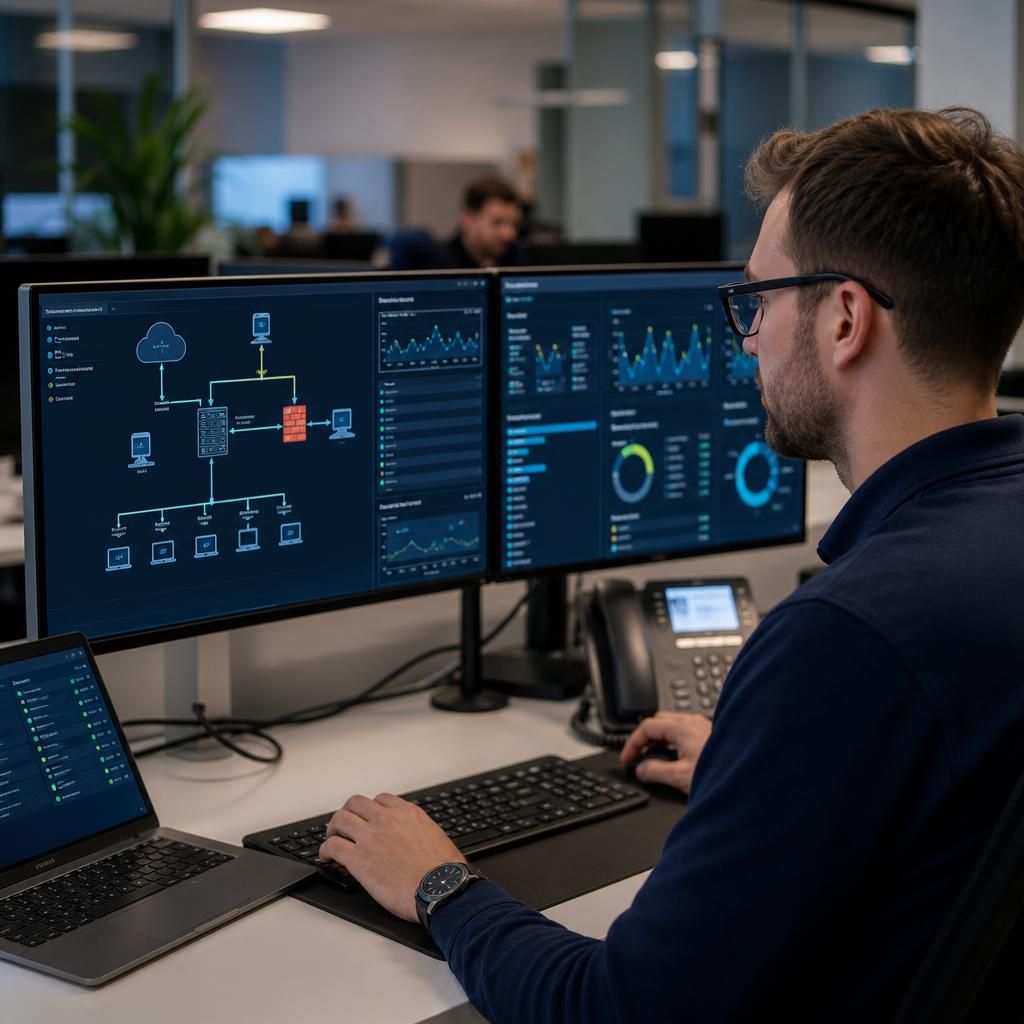
Managed IT infrastructure is defined not only by the technologies involved, but also by who is responsible for operating each dependency. A service may directly manage a firewall, server or cloud resource, while coordinating with an internet provider, software supplier or internal business owner when an issue crosses organisational boundaries.
A clear responsibility model should state who approves access, owns business data, authorises changes, maintains specialist applications and makes recovery decisions. This prevents assumptions that every technology-related task is included automatically and provides a clear route for resolving problems involving several suppliers or teams.
For SMEs, this distinction is particularly important where infrastructure is shared between internal staff, external providers and cloud platforms. The managed service should identify these boundaries in practical terms, so day-to-day technical work and business decisions are handled by the appropriate person.