Does IT asset management include software licensing compliance?
Yes. IT asset management can include software licensing compliance by recording licence entitlements, installations, users, renewal dates and usage, then comparing them to identify unauthorised, duplicated or unused licences and reduce compliance risk.
Yes—software licensing compliance is a standard part of mature IT asset management, although the depth of coverage depends on the tools, contracts and processes used. The purpose is to confirm that software is being used within the rights granted by its licence terms, while maintaining reliable records that can support internal reviews, renewals and supplier audits.
A basic hardware inventory may show which applications are installed, but that alone does not establish compliance. A meaningful review also considers the licence model, the agreement that governs use, the people or devices covered, and any conditions attached to deployment. Common licensing models include:
- Per-user or named-user licences
- Per-device licences
- Concurrent-user licences
- Subscription and consumption-based licensing
- Perpetual licences with separate maintenance or support terms
- Cloud service subscriptions purchased directly or through a reseller or marketplace
Compliance can become more complex where software is installed on virtual machines, accessed through remote desktops, used across multiple sites or shared by different teams. Contracts may also set conditions relating to geographical use, permitted environments, user types, backup copies, affiliate companies or the transfer of licences between devices. These terms need to be assessed alongside technical inventory data rather than treated as a simple count of installations.
An effective software compliance process normally includes the following stages:
- Establish the contractual position. Collect purchase records, agreements, order forms, renewal notices and amendments. These documents define the rights available to the organisation and may take precedence over assumptions based on how a product is deployed.
- Map the technical estate. Identify applications, versions, editions, deployment methods, cloud services and relevant devices or accounts. Discovery may use endpoint management, directory information, cloud administration portals and other approved data sources.
- Normalise the information. Different records may use varying names for the same application, while one product may have several editions or licensing arrangements. Normalisation makes comparisons more accurate and helps distinguish genuine installations from duplicates or remnants of older software.
- Apply the licence rules. Compare actual use with the terms in each agreement, taking account of factors such as user counts, device assignments, virtualisation and subscription periods.
- Resolve exceptions. Investigate discrepancies and record whether they result from inaccurate inventory data, an expired agreement, an unapproved installation, a missed renewal or a legitimate contractual entitlement that has not been documented correctly.
- Maintain evidence. Keep an auditable record of the source documents, review date, assumptions, decisions and corrective actions. This creates a defensible trail if a supplier requests information.
Software compliance is not only about finding over-deployment. Under-licensing can create contractual and financial risk, but unused subscriptions, duplicate agreements, unassigned seats and unnecessary editions can also indicate poor control of technology spending. A review should therefore consider both entitlement and genuine business need, without cancelling a licence that is required for continuity, security or specialist work.
Governance is particularly important for cloud applications. A service may be procured by a department without passing through the organisation’s usual purchasing route, and user accounts may remain active after a role changes. IT asset management can link application ownership, approval records, account status and renewal responsibility so that subscriptions are reviewed as part of employee lifecycle and procurement processes.
Controls should also cover software introduced outside the standard IT process. This may include departmental purchases, trial accounts, developer tools, browser extensions and open-source components. Open-source software is not automatically free of obligations: its licence may impose conditions on modification, distribution, attribution or inclusion in other products. The relevant requirements depend on the licence and how the software is used.
Responsibility should be shared clearly. IT may manage discovery and technical records, procurement may retain commercial documentation, finance may oversee expenditure, and department owners may confirm business need. Security and legal or compliance teams may need to review higher-risk applications or contractual terms. Assigning an owner to each software category helps prevent records from becoming inaccurate between formal reviews.
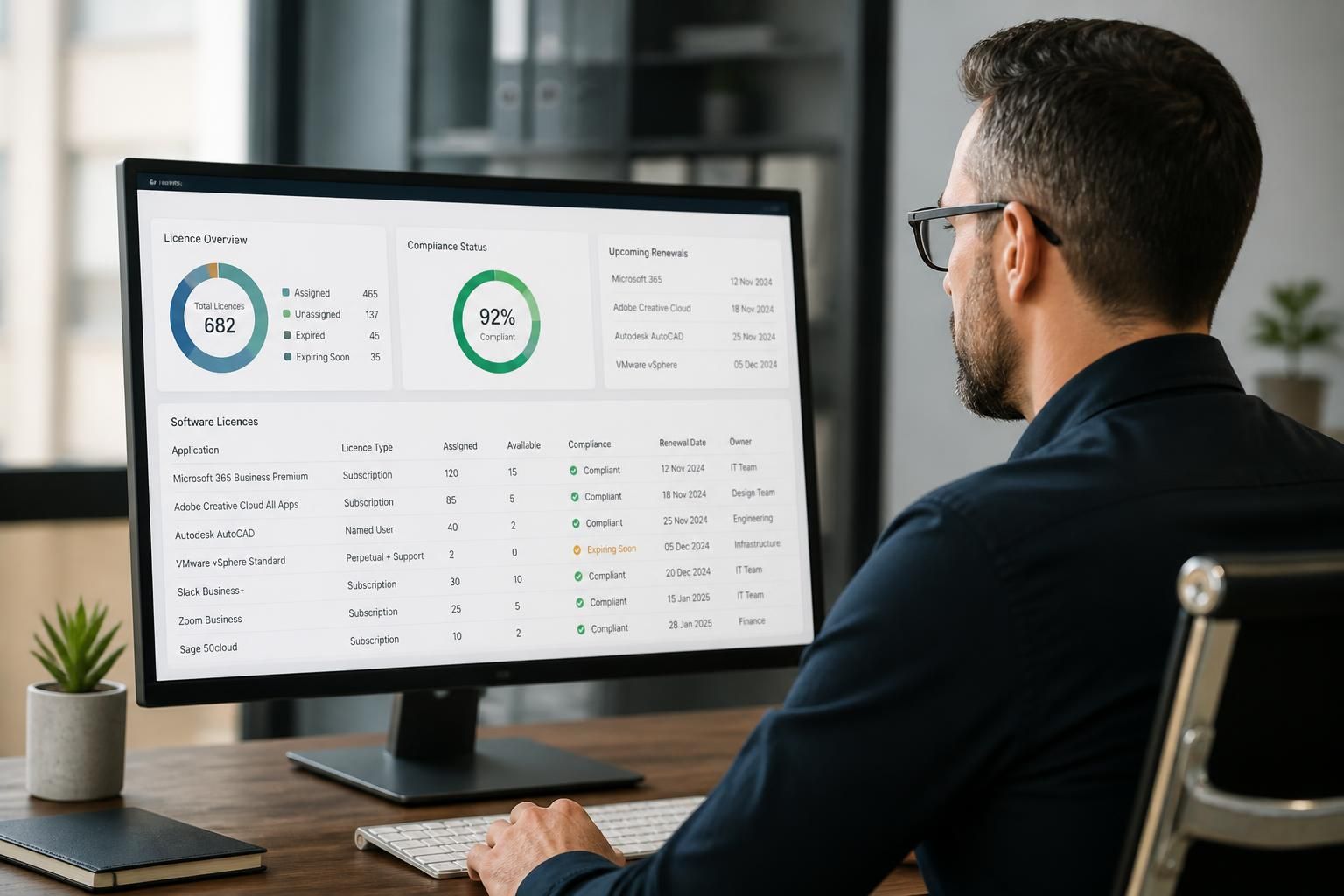
Useful compliance records can include the software name and edition, licence metric, entitlement source, agreement identifier, purchase and renewal dates, assigned owner, permitted users or devices, deployment locations, evidence of approval, review findings and outstanding actions. Records should have a defined retention approach, particularly where agreements may be needed to demonstrate historic rights.
IT asset management can identify and organise this information, but it does not replace reading the relevant contract. Licence interpretation can be affected by supplier-specific definitions and changing commercial terms. Where the position is unclear, the organisation should obtain advice from the supplier, licensing specialist or appropriate legal adviser before relying on an assumption.
For a business using a managed IT service, software licensing compliance may form part of a wider asset register, procurement review and technology governance process. S2 Technology Group can help organisations structure IT asset information and review software controls as part of broader IT management, cyber security and cloud support work.
IT licensing compliance decisions should distinguish a confirmed breach from an information gap. An apparent excess installation may result from duplicate records, an incorrect user assignment or an agreement that has not been linked to the asset register. Treating every discrepancy as a breach can lead to unnecessary procurement, while overlooking a genuine breach can leave the organisation exposed.
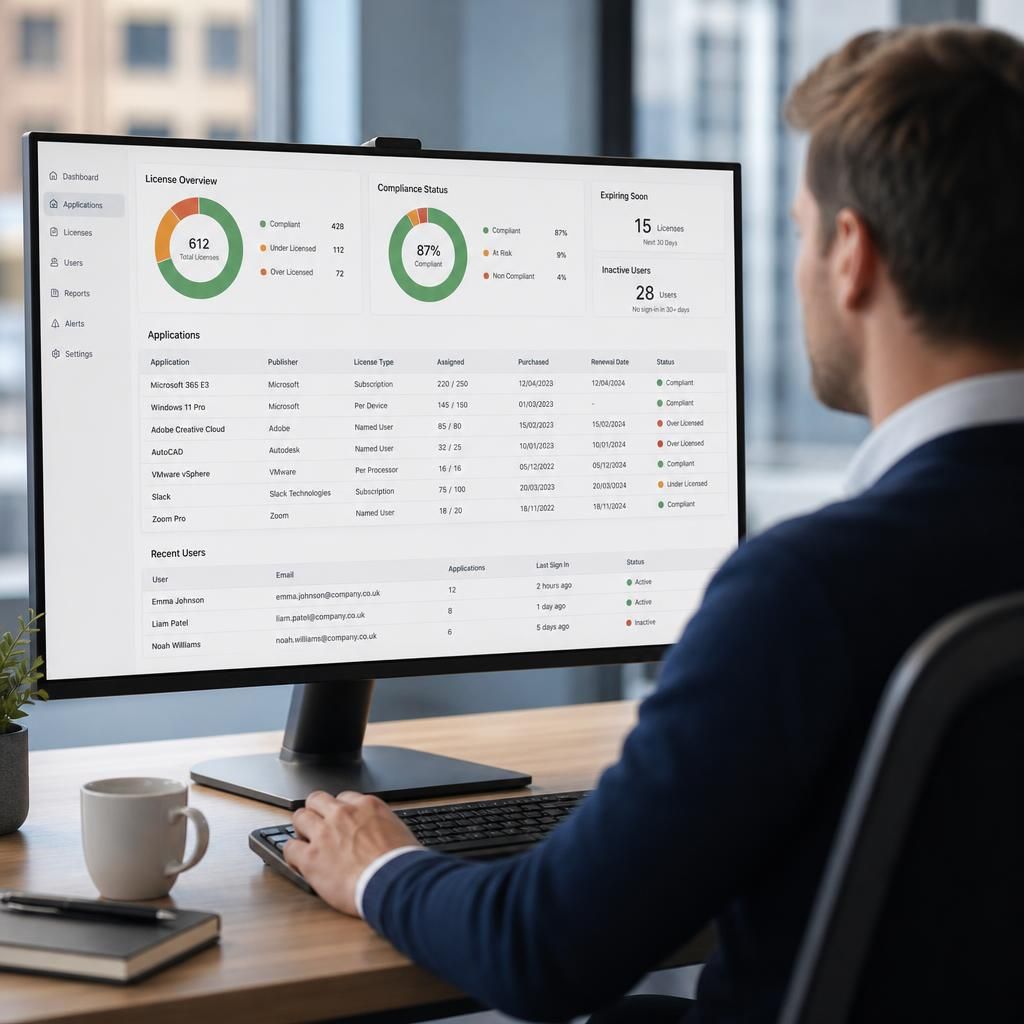
A practical compliance dashboard can prioritise exceptions by:
- the confidence that the licensing issue is genuine;
- the contractual or financial significance of the discrepancy;
- whether the software supports a critical business process;
- the sensitivity of information handled by the application; and
- the action required, such as validating records, reallocating a licence or seeking specialist advice.
This approach gives business leaders a clearer basis for deciding which findings need immediate escalation and which can be resolved through better record keeping.