
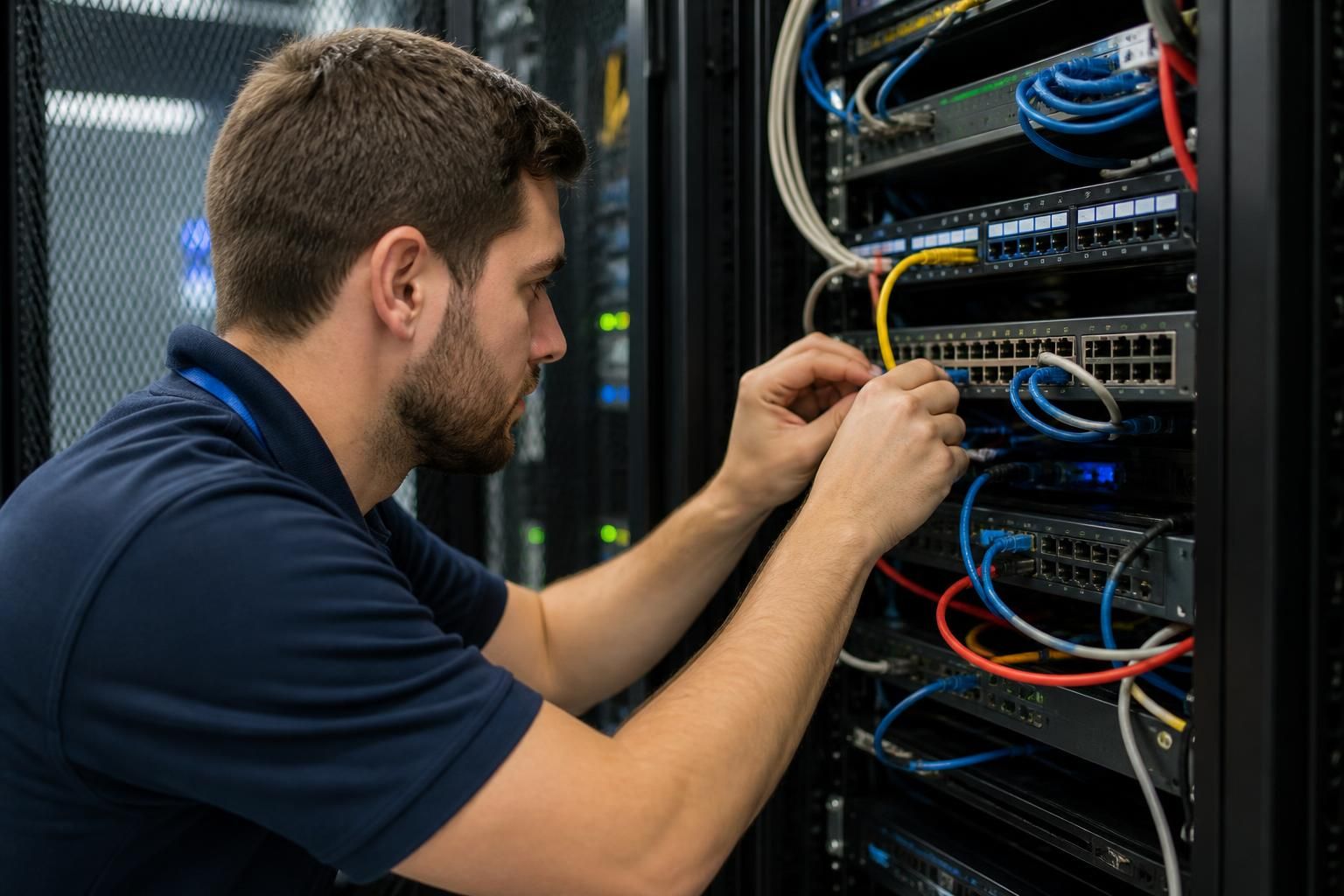
When should a business use onsite IT support?
A business should use onsite IT support when an issue requires physical access, hands-on troubleshooting or work that cannot be completed securely through remote assistance. This may include diagnosing hardware faults, installing or configuring network equipment, supporting office moves, or resolving infrastructure problems affecting users on site.
Businesses should use onsite IT support when the required investigation, change or assurance depends on being physically present at the workplace. It is particularly appropriate when remote troubleshooting has not identified the cause, when several users or systems are affected, or when technology must be inspected, tested or managed in its operating environment.
Situations that commonly justify an onsite visit include:
- Repeated or unresolved faults: If the same problem continues after remote troubleshooting, an engineer can examine the wider environment rather than treating each symptom separately. This may reveal an interaction between devices, local infrastructure, power, cabling, wireless coverage or user access.
- Problems affecting a work area or site: A fault involving multiple employees, a meeting space, a production area or a shared system may need investigation where the equipment is located. Onsite assessment helps distinguish an individual device issue from a broader site problem.
- New equipment and workplace changes: Onsite support can help validate that newly deployed equipment is connected correctly, positioned appropriately and working with the existing environment. It can also support changes to office layouts, work areas and technology-enabled facilities.
- Security-sensitive activity: Some work benefits from controlled, in-person handling, particularly where equipment, removable media, access controls or network infrastructure must be checked directly. Physical inspection can form part of a wider security review, alongside account, software and configuration checks.
- Technology used outside a standard office setting: Manufacturing, logistics and other operational environments may contain devices or connectivity that cannot be assessed fully from a desk. An onsite visit allows support work to take account of the conditions in which systems are actually being used.
- Planned technology changes: Onsite involvement may be suitable for a significant infrastructure change where the installation, testing and handover need to be coordinated with staff and the physical environment. The work should be planned around dependencies, access requirements, user impact and a clear rollback approach.
Onsite support is not automatically the best response to every fault. Password issues, many software errors, account changes, configuration queries and some connectivity problems can often be diagnosed and resolved remotely. A sensible support model begins with triage: establish what is affected, gather relevant logs or error details, assess business impact and determine whether the issue has a physical component. If remote work can resolve the problem securely and reliably, a visit may add unnecessary disruption.
The need for onsite support becomes stronger when remote access is unavailable, unreliable or insufficient for proper diagnosis. It may also be appropriate where a remote workaround would leave the underlying risk in place, create repeated disruption or make it difficult to confirm that the fault has been fully resolved. The objective should be to restore a dependable service, not simply to apply a temporary fix that conceals the cause.
For businesses with more than one location, onsite support should be considered as part of a wider service design rather than arranged only when something fails. Each site may have different equipment, connectivity, physical constraints and business dependencies. A documented approach can define which issues are handled remotely, which require a local visit and what information must be collected before an engineer attends. This reduces unnecessary travel while ensuring that location-dependent problems receive the right type of investigation.
Before an onsite visit, the support team should record the affected users, devices, applications and locations, together with the symptoms, relevant changes and troubleshooting already completed. Access permissions, site contacts, safety requirements and any restrictions around operational areas should also be agreed in advance. For planned work, the record should include the intended change, dependencies, testing steps, acceptance criteria and actions if the result is not as expected.
After the work, the outcome should be documented clearly. This may include the fault identified, actions taken, equipment or settings changed, tests completed and any follow-up work still required. Good records help remote support handle future incidents more effectively and provide evidence of how important systems are maintained.
S2 Technology Group provides onsite IT support as part of a broader managed IT service, combining in-person technical work with remote assistance, cybersecurity guidance, cloud solutions and connectivity support. For a small or medium-sized organisation without a full internal IT team, this approach helps determine when a physical visit is genuinely required and when another support method is more suitable.
Onsite IT support can also be appropriate before a fault occurs, when a business needs its physical technology environment assessed as part of planned maintenance or infrastructure planning. A remote review may show device status and configuration, but it cannot always confirm how equipment is installed, positioned or connected in the workplace.
An onsite assessment can help identify physical conditions that may affect reliability, such as restricted access to equipment, unsuitable placement, connections that are difficult to trace or changes made without being recorded. These findings can inform equipment replacement, workspace changes, network improvements and future support arrangements.
This makes onsite support useful for organisations that are preparing for a move, expanding a site, changing how staff work or reviewing technology that has developed over time. The visit should result in clear records of the current environment, identified risks and recommended next steps, so that future decisions are based on the actual workplace rather than assumptions.
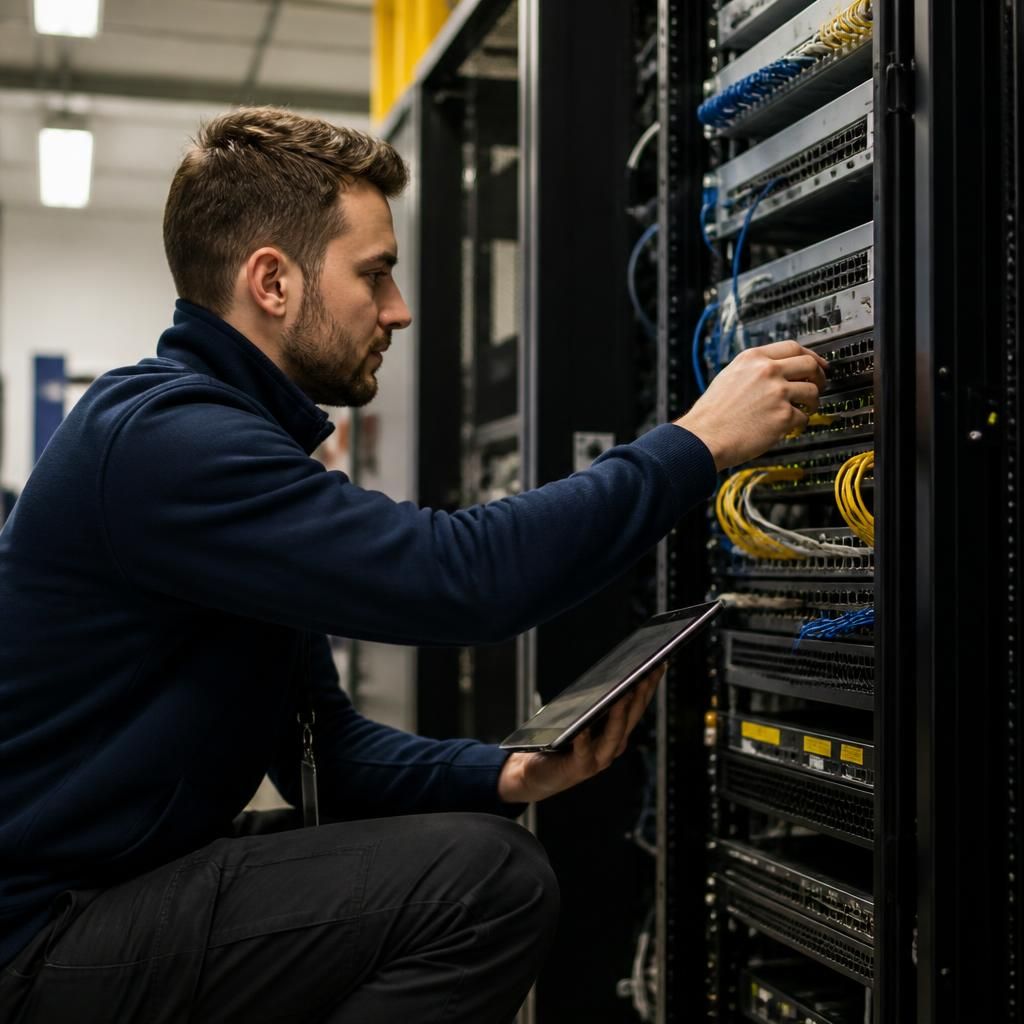
Discuss Your Onsite IT Support Requirements
If you are unsure whether an onsite visit is appropriate, discuss your requirements with S2 Technology Group to identify the most suitable support approach. Share the symptoms, affected systems and work already completed so the next steps can be assessed clearly.