How are software licences managed in small business IT support?
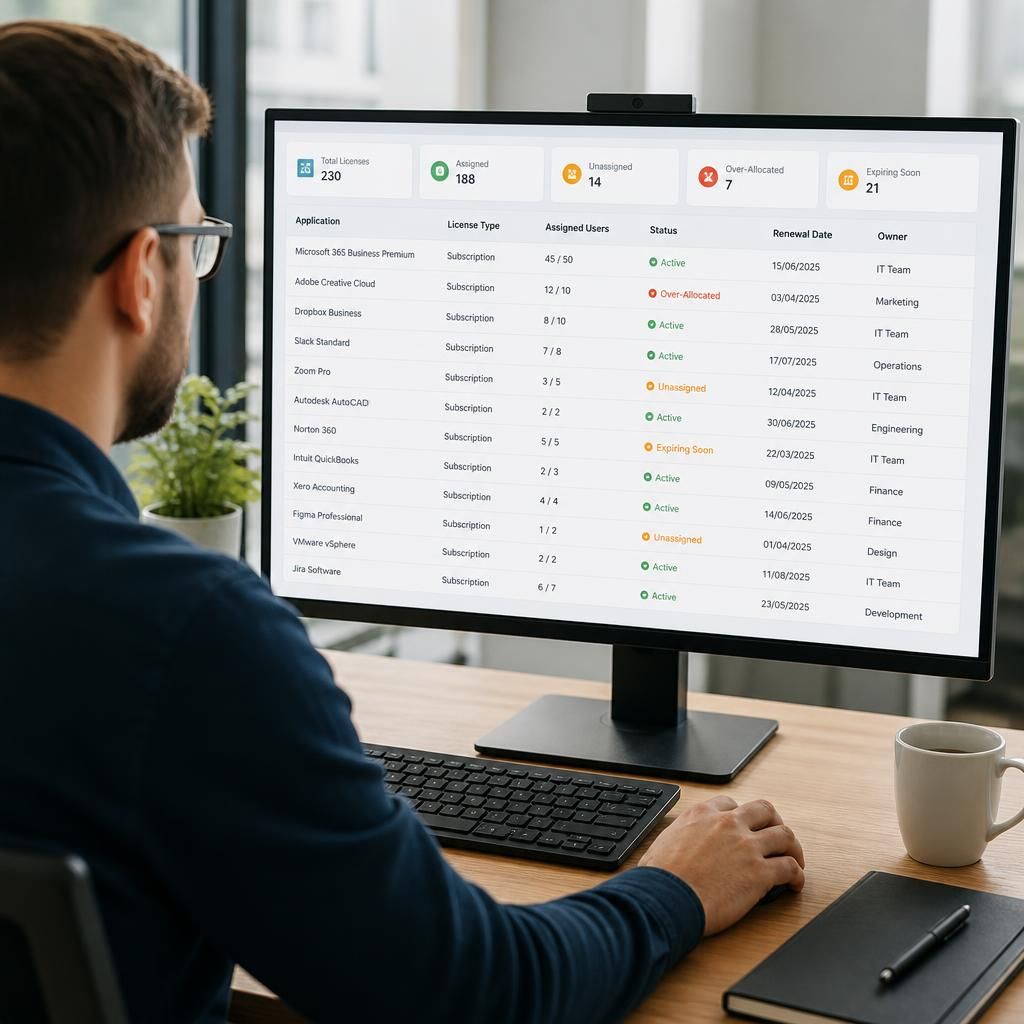
Software licences are managed through a documented inventory that records each application, licence type, assigned user or device, renewal date and permitted usage. Small business IT support can review this information during onboarding, offboarding and regular audits to remove unused access, reduce compliance risks and keep renewal costs under control.
Small businesses manage software licences effectively by combining clear ownership, accurate entitlement records, controlled purchasing and regular review. The aim is to ensure that the organisation is using software in accordance with its terms, that security is not weakened by unmanaged applications, and that technology spending reflects genuine business requirements.
Start with the licence terms
Different licensing models create different responsibilities. A perpetual licence may permit ongoing use of a particular version, while a subscription normally depends on continuing payments and compliance with user or device limits. Other arrangements may be based on concurrent users, locations, features or the number of installations. The business should understand what each agreement permits before software is deployed, particularly where staff work across several devices or sites.
Licence documentation should be retained with the relevant purchasing or supplier records. This provides evidence of the rights acquired and helps clarify restrictions relating to copying, transfer, upgrades, contractors, home working and use by affiliated organisations. Terms can change when software is upgraded, moved to a cloud platform or purchased through a reseller, so the original agreement should not be treated as permanently applicable to every later version.
Assign responsibility for purchasing and approval
Uncontrolled purchasing is a common source of duplicated subscriptions and compliance gaps. A simple approval process should establish:
- who can request new software;
- which business need the application is intended to meet;
- whether an existing tool already provides the required function;
- what information the application will access;
- who approves the expenditure and contractual terms; and
- who is responsible for administering the licence after purchase.
This process should include a check for data protection, security and integration requirements. An apparently inexpensive application may create additional risks if it stores confidential information, permits weak authentication or cannot be managed centrally.
Separate entitlement from technical access
Having a valid contract does not automatically make access safe, and restricting access does not prove that the business is properly licensed. These are related but separate controls. The organisation should maintain evidence of what it has purchased while also using administrative settings, identity controls and device policies to restrict access to approved people and approved environments.
Central administration is particularly useful for cloud applications. It can help the business apply consistent authentication requirements, limit administrator privileges and identify accounts that have been created outside the agreed process. Where a supplier provides an administrative portal, access to it should be limited to named administrators rather than shared credentials. Changes to licence quantities, plans or permissions should be recorded so that there is an audit trail.
Review usage and business need
Licence management is not a one-off purchasing exercise. At suitable intervals, the business should compare actual use with the service purchased. This can identify applications that are rarely used, duplicate functionality, inappropriate service tiers and accounts that no longer have a valid business purpose. Usage data should be interpreted carefully: a low-use application may still be essential for a specialist process, legal requirement or occasional operational event.
Reviews should also consider whether software remains suitable. A product may be correctly licensed but no longer receive security updates, support a required operating system or meet the organisation’s security standards. Replacing or consolidating applications should therefore be assessed alongside licence cost, data migration, staff dependencies and continuity requirements.
Control renewals and contract changes
Subscription agreements should have a named owner who understands the supplier’s notice periods, billing arrangements, automatic renewal terms and permitted changes to the plan. Before a commitment continues, the business can confirm whether the number of users, features and service level still match operational needs. Any decision to change or cancel a service should include a check for data export, retention, account closure and replacement arrangements.
Financial records should distinguish software subscriptions from hardware, consultancy and other IT expenditure. This makes it easier to identify recurring commitments and allocate costs to the relevant department, project or site. It also reduces the risk that a service continues simply because its charge is hidden within a general payment account.
Prepare for audits and internal checks
A practical licence management process should produce an evidence trail without creating unnecessary administration. Useful records can include purchase confirmations, agreements, invoices, approval decisions, administrative changes and review outcomes. The business should decide how long these records need to be retained and ensure that they are protected from unauthorised alteration.
Internal checks can test whether installations and accounts correspond with the permissions purchased, whether former services have been properly closed, and whether staff are obtaining applications through approved channels. Software discovery tools and supplier reports can support these checks, but their results still require interpretation because portable applications, shared devices and offline use may not be detected consistently.
For a small organisation without a dedicated software asset manager, an IT support provider such as S2 Technology Group can help establish the process, administer approved platforms and incorporate licence checks into broader IT governance. S2 supports small and medium-sized businesses around Stourbridge, including Kinver, Wordsley, Kingswinford, Kidderminster, Halesowen, Dudley and neighbouring areas.
A useful licence dashboard should show exceptions, not just how many subscriptions the business owns. Clear status indicators can highlight licences that are unassigned, allocated beyond the purchased entitlement, linked to inactive accounts or approaching renewal. This helps the responsible administrator focus on records that need investigation rather than manually checking every application.
Each exception should have an explanation and an owner. For example, an unassigned licence may be reserved for a planned hire, while an apparently duplicate subscription may support a separate department or operational requirement. Recording these decisions prevents valid exceptions from being repeatedly challenged and creates a clearer account of how software is governed.