
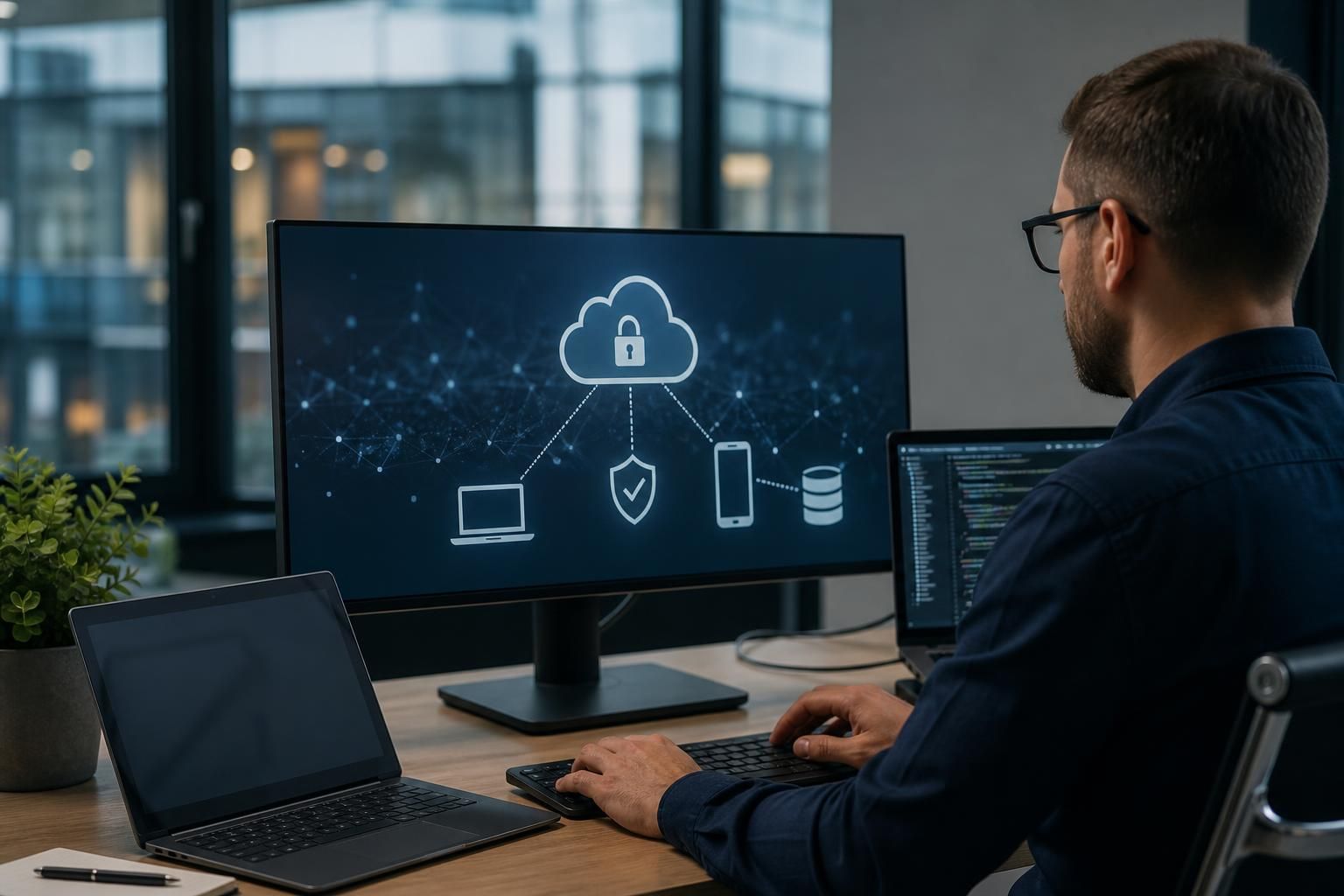
What is the difference between cloud security and endpoint security?
Cloud security protects cloud-based services, applications, identities and data, while endpoint security protects devices such as laptops, desktops and mobile phones that access those resources. They address different parts of the technology environment and work together to reduce risks such as unauthorised access, malware and data loss.
The key difference between cloud security and endpoint security is the security boundary each one manages. Cloud security governs the configuration, access, workloads and information held in cloud platforms, whereas endpoint security governs the laptops, desktops, mobiles and other devices used to connect to them. Neither is a replacement for the other: a secure cloud account can still be accessed from a compromised device, while a well-protected device can connect to a poorly configured cloud service.
Cloud security focuses on services, identities and data. Its controls are applied within hosted platforms and the connections between them. Typical areas include:
- Identity and access management, including authentication, authorisation and account lifecycle controls.
- Permissions for users, administrators, applications and automated workloads.
- Secure configuration of cloud storage, virtual infrastructure, software platforms and collaboration services.
- Encryption and key management for information in transit and at rest.
- Logging, monitoring and alerting for unusual access, configuration changes and suspicious activity.
- Data retention, backup, recovery, compliance and secure removal when information is no longer required.
Cloud security is often shared between the organisation and the cloud provider. The provider may secure the underlying data centre and core platform, while the customer remains responsible for areas such as user accounts, permissions, data, configuration and applications. The exact division depends on the service being used, so it should be documented rather than assumed.
Endpoint security focuses on the device and its local activity. Its purpose is to prevent, detect and contain threats operating on equipment that accesses business systems. Relevant controls include:
- Anti-malware and behavioural threat detection.
- Endpoint detection and response to investigate suspicious processes or activity.
- Security updates and vulnerability management for operating systems and applications.
- Device encryption, secure configuration and screen-lock requirements.
- Application control, removable-media restrictions and local privilege management.
- Device inventory, health checks and the ability to isolate a compromised endpoint.
Endpoint security also addresses risks that exist before a user reaches a cloud service. For example, malware may capture credentials, alter files locally or use an authenticated session to access business information. Device controls can reduce this risk, but they cannot correct excessive cloud permissions or an exposed storage configuration.
The controls overlap at the point of access. A modern security design treats the user, device, application and requested data as connected parts of one access decision. Cloud access policies may consider whether a device is encrypted, updated, managed and reporting a healthy security status. Endpoint tools, in turn, may use identity and cloud activity data to identify whether a device is behaving unusually.
This relationship creates important differences in failure modes:
- A cloud security failure might involve an overly broad administrator role, an exposed storage location or an account without adequate authentication controls.
- An endpoint security failure might involve an unpatched laptop, malicious software, stolen credentials or a user with unnecessary local administrator rights.
- A combined failure might occur when an attacker compromises a device and then uses a valid account to access cloud applications.
For this reason, organisations should not measure the two disciplines using the same criteria. Cloud security reviews should examine permissions, service configuration, data flows, logging and provider responsibilities. Endpoint security reviews should examine device coverage, patch status, encryption, detection capability, isolation procedures and local privileges. Both should be tested against the organisation’s policies and business processes.
Effective protection depends on coordinated controls. A practical approach is to maintain an accurate inventory of cloud services, accounts and endpoints; apply least-privilege access; require strong authentication; keep devices supported and patched; monitor activity centrally; and define what happens when a device, account or cloud service is suspected of compromise. Access should be removed when people leave, devices are retired or business requirements change.
In summary, cloud security protects the hosted environment and the information managed within it, while endpoint security protects the physical or virtual devices that interact with that environment. Cloud controls without endpoint controls leave the access path exposed. Endpoint controls without sound cloud configuration leave the destination exposed. S2 Technology Group can help organisations assess both layers as part of a wider managed IT and cyber security strategy, with controls matched to the systems, users and risks involved.
A practical way to distinguish cloud security from endpoint security is to examine the evidence produced during an incident. Cloud audit records show activity such as sign-ins, permission changes, file access and unusual use of applications. Endpoint telemetry shows what happened on the device, including processes launched, files changed, connections made and security controls disabled.
Investigators compare these records rather than relying on either source alone. For example, an unusual cloud sign-in may be explained by a new device, a stolen session or malicious software running on a known laptop. Linking the user account, device identity and event times helps establish whether the main issue is account misuse, endpoint compromise or both. This distinction supports more precise containment, such as revoking a session, isolating a device or reviewing access granted to the affected account.
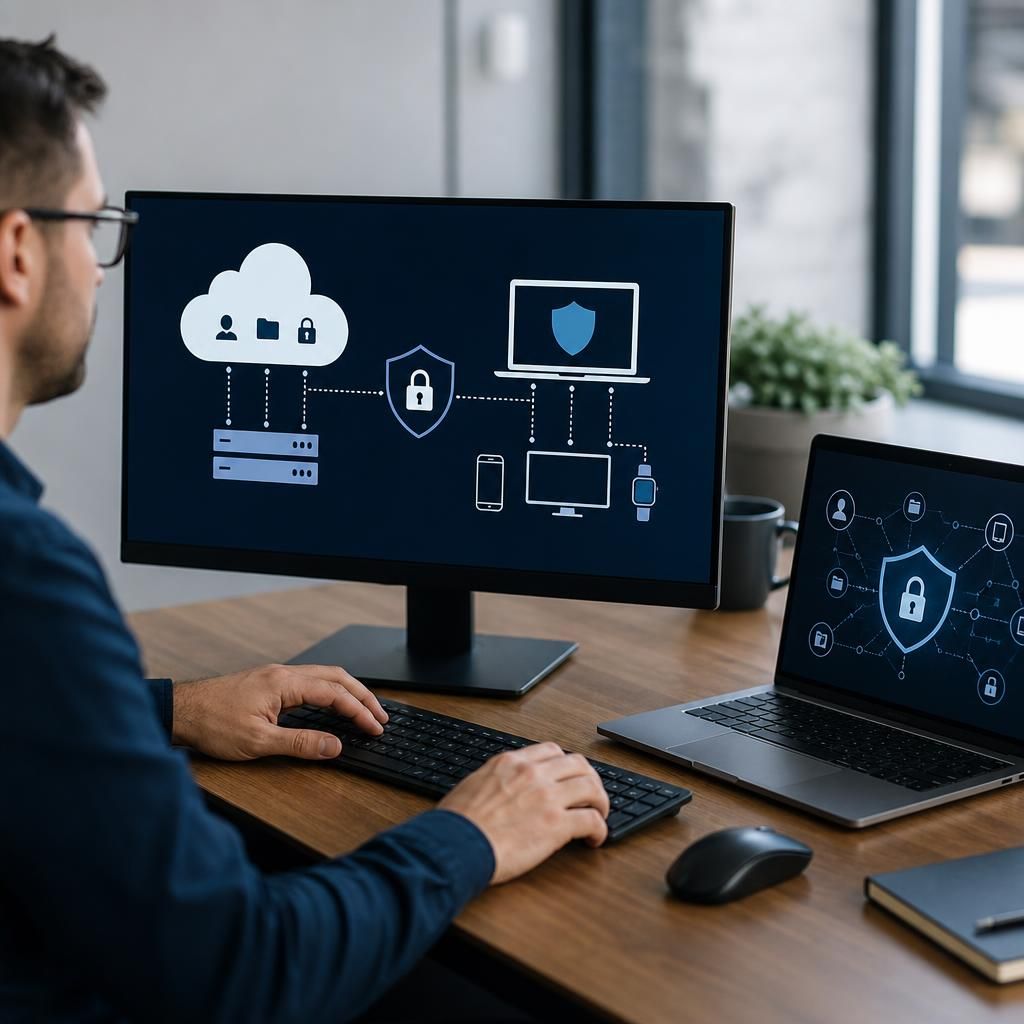
Discuss your cloud and endpoint security requirements
Discuss your cloud and endpoint security requirements with S2 Technology Group to identify suitable controls, responsibilities and priorities for your organisation. This can help you plan a security approach that reflects your users, devices, cloud services and business processes.