How does cloud and endpoint security reduce ransomware risk?
Cloud and endpoint security reduces ransomware risk by preventing malicious files from running, detecting suspicious activity and limiting unauthorised access across devices and cloud services. Strong access controls, protected backups, monitoring and tested recovery procedures also reduce the chance that an attack can spread or permanently disrupt business data.
Cloud and endpoint security reduces ransomware risk by controlling how users, devices and cloud services interact with business data. It addresses more than file encryption: a well-designed approach also considers stolen credentials, malicious scripts, data theft, unauthorised changes to cloud resources and attempts to disable security controls.
Endpoint controls reduce the number of ways ransomware can start. Devices should be securely configured, regularly patched and managed against an agreed baseline. Common measures include removing unnecessary administrator privileges, restricting unapproved applications, controlling scripts and macros, and preventing users from running files from suspicious locations. Email and web protections can also inspect attachments, links and downloads before they reach a user or device.
Device health is important because a trusted cloud account may still be accessed from a compromised laptop. Endpoint management can check whether a device is encrypted, supported, correctly configured and reporting security information before allowing access to sensitive services. If a device begins behaving abnormally, access can be restricted or the device isolated while it is investigated.
Cloud security limits what an attacker can do after gaining access. Each user, application and administrator should have only the permissions required for its role. Strong authentication, separate administrative accounts and controls over privileged actions make it harder for stolen credentials to be used to alter storage, create new accounts or remove security settings. Access policies should also consider the device, location, sign-in behaviour and sensitivity of the resource rather than relying on a password alone.
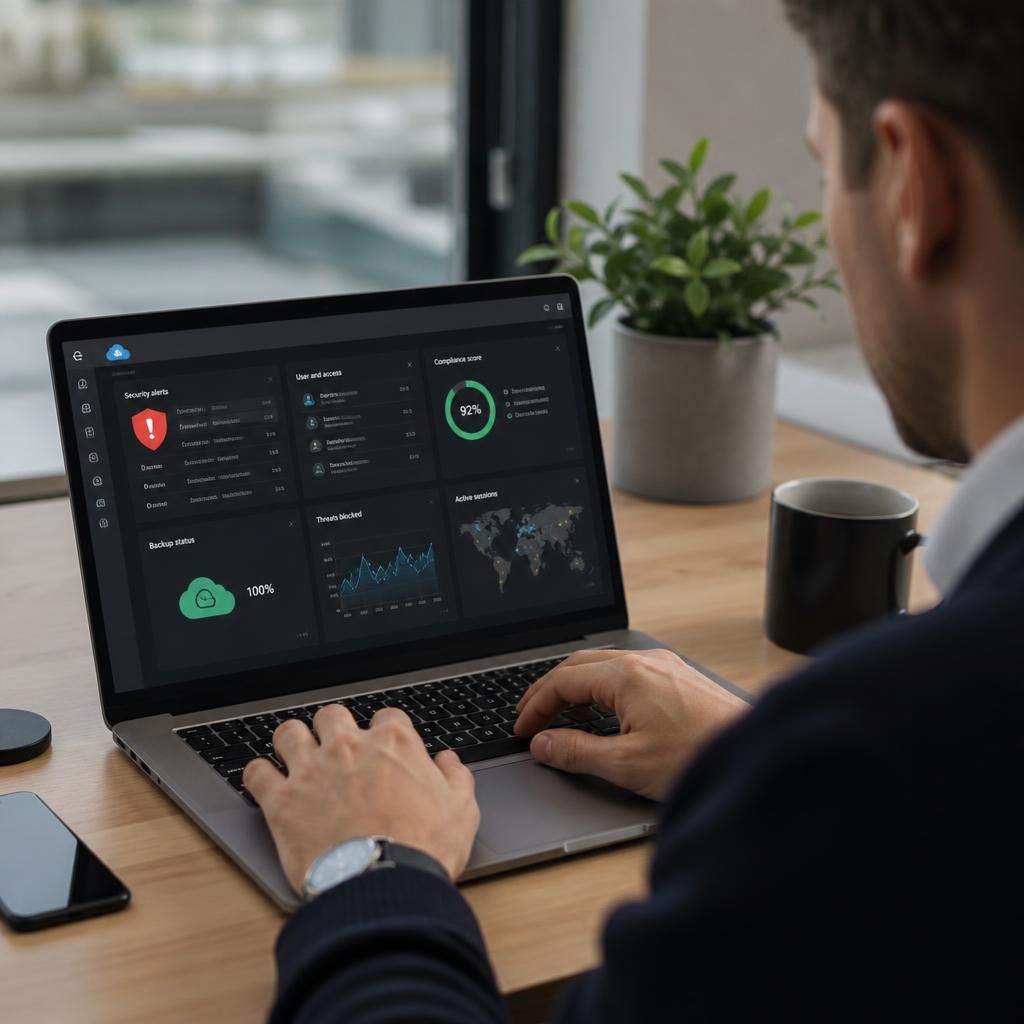
Cloud services need protection against both encryption and unauthorised deletion. Useful controls include version history, retention rules, restrictions on destructive operations and separation between everyday administration and high-impact data management. Recovery copies should be protected from the same identities and management paths used by production systems. Their usefulness should be confirmed through documented restoration tests, not assumed from a dashboard showing that a copy exists.
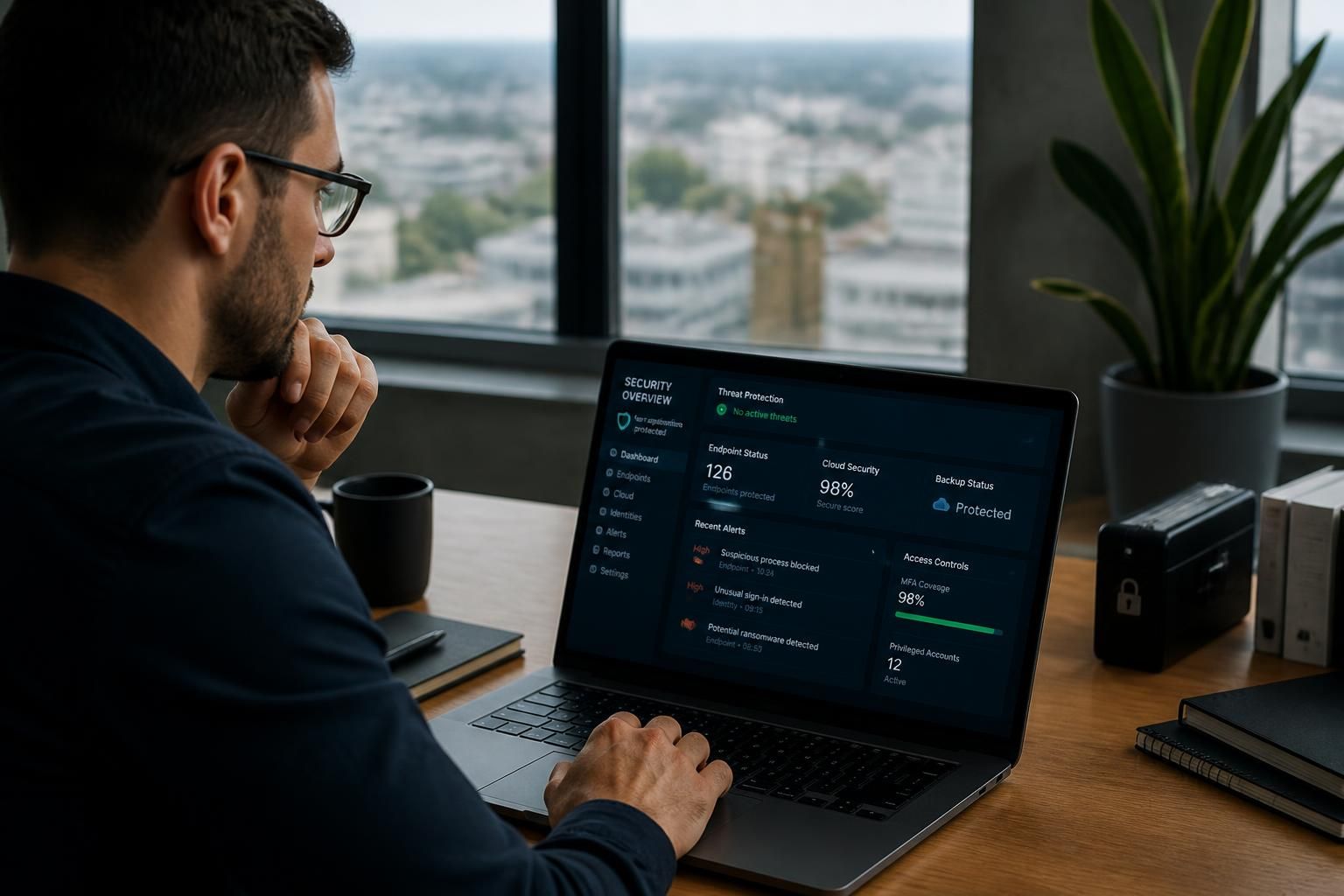
Monitoring connects endpoint and cloud activity. Security teams should be able to relate events such as a suspicious process on a laptop, an unusual sign-in, a large download and changes to cloud storage permissions. Relevant logs need suitable retention, restricted access and a defined review process. Alerts are most useful when they have clear ownership and escalation criteria, so that unusual activity can be investigated before it becomes widespread disruption.
Reducing ransomware risk also requires limiting its potential spread. Separate administrative roles, network segmentation and restrictions on device-to-device communication can prevent one compromised system from reaching every server or workstation. Cloud environments benefit from separating development, testing and production resources, while sensitive information should not be exposed through broad shared links or excessive service permissions.
People and procedures remain part of the control framework. Staff should know how to report suspicious messages, unexpected file changes and unusual sign-in prompts. Administrators should understand which actions require additional approval, how to preserve evidence and when to disable an account or isolate a device. Policies should define who can change security configurations, how exceptions are recorded and how access is removed when a person or supplier no longer needs it.
The effectiveness of these measures depends on their configuration and maintenance. Organisations should review privileged access, unsupported devices, inactive accounts, cloud sharing settings, endpoint coverage, alert handling and restoration tests as part of a recurring security process. Testing should include realistic scenarios such as a compromised user account, a device with malicious software and an attempt to alter cloud data.
For a small or medium-sized organisation without a full in-house security function, S2 Technology Group can help assess how endpoint controls, cloud permissions, monitoring and recovery arrangements work together. The objective is to identify gaps between policy and practical protection, then establish controls that can be managed consistently as the organisation grows.
Service accounts and application identities are a frequently overlooked route into cloud systems during a ransomware attack. These accounts may run backup jobs, synchronise files or manage cloud resources without a person signing in, so a stolen password, API key or secret can provide powerful access while avoiding some user-focused security checks.
Reducing this risk requires an inventory of non-human identities and a clear record of what each one can access. Unused accounts should be removed, interactive sign-in should be blocked where it is not required, and permissions should be limited to specific resources and actions. Secrets should be stored securely and rotated when their purpose, owner or associated system changes. Monitoring should also identify unusual use, such as a service account accessing data outside its normal function or making large-scale changes.
This approach limits the damage that an attacker can cause with a compromised application credential. It also makes investigations more precise because each automated identity has an assigned purpose, owner and expected pattern of activity.